English
 Español
 tiếng việt
 русский
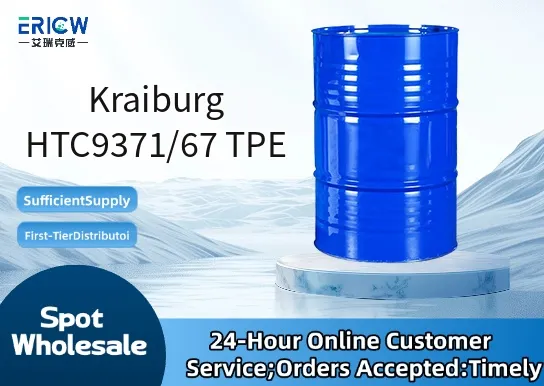
Excellent soft-touch feel with high elasticity and low compression set.
Good resistance to UV, ozone, and weathering for extended outdoor service life.
Easy processing via injection molding and extrusion without pre-drying.
Outstanding adhesion to polypropylene (PP) and polyethylene (PE) substrates.
Halogen-free formulation compliant with RoHS and REACH requirements.
Automotive interior trim components including door panels and armrests.
Consumer electronics housings and protective overmolded grips.
Household appliance seals and ergonomic handles.
Medical device grips and non-sterile wearable components.
Outdoor equipment covers and weather-resistant functional parts.
| Chemical Type | Thermoplastic Elastomer (TPE), PP-based |
| Product Form | Pellets |
| Appearance | Off-white, free-flowing granules |
| Hardness (Shore A) | 67 ± 3 |
| Density (g/cm³) | 0.89 – 0.91 |
| Melt Flow Rate (230 °C / 2.16 kg) | 15 – 25 g/10 min |
| Key Features | Soft-touch, PP-adhesive, UV-stabilized, halogen-free |
| Primary Applications | Overmolding, soft-grip components, weather-exposed parts |
Q1: What is the primary function of Kraiburg HTC9371/67 TPE in thermoplastic elastomer formulations?
A: HTC9371/67 is a functionalized thermoplastic elastomer additive designed to enhance compatibility and interfacial adhesion between dissimilar polymer phases—particularly in TPE blends involving SEBS, PP, or PE matrices. It acts as a reactive compatibilizer rather than a filler or plasticizer.
Q2: Is HTC9371/67 suitable for applications requiring direct food contact?
A: While HTC9371/67 is formulated without intentionally added heavy metals or known allergens, it is not pre-certified for food-contact use. End-use compliance depends on final compound formulation, processing conditions, and regulatory evaluation by the responsible party under applicable regional frameworks.
Q3: How should HTC9371/67 be incorporated into a TPE compound during processing?
A: It is typically introduced during the melt compounding stage—either pre-blended with base polymers or fed continuously via side-stuffer. Good dispersion is achieved under standard twin-screw extrusion conditions; residence time and shear profile should be optimized to ensure uniform distribution without excessive thermal degradation.
Q4: Does HTC9371/67 affect the mechanical properties of finished TPE parts?
A: When used at recommended levels, it generally improves tensile strength and elongation retention in multiphase systems by reducing phase domain size and enhancing interfacial bonding. Over-addition may lead to viscosity increase or diminished elasticity, so dosage should be balanced against target performance requirements.
Q5: Can HTC9371/67 be used in overmolding applications?
A: Yes—it is commonly applied in TPE-overmolded assemblies where strong adhesion to rigid substrates like PP or ABS is required. Its reactive functionality supports improved bond integrity during secondary molding, especially when paired with compatible base resins and appropriate mold temperature control.
Contact With Us:
E-mail: wangxingqiang@ericwchem.com
Have a Questions? Call Us:
Add:
Building A1, Jiete Industrial Park, Huangpu District, Guangzhou City, Guangdong Province, China