English
 Español
 tiếng việt
 русский
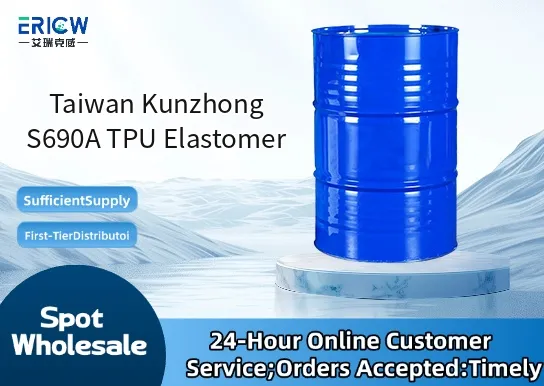
Excellent abrasion resistance for extended service life in demanding mechanical environments.
Outstanding elasticity and high rebound resilience, enabling consistent performance under cyclic loading.
Good low-temperature flexibility down to –30 °C without significant loss of toughness.
Compatible with common thermoplastic processing methods including extrusion, injection molding, and blow molding.
Low inherent moisture absorption, minimizing dimensional instability during storage and processing.
High-performance automotive interior trims and soft-touch components.
Industrial hoses and pneumatic tubing requiring flexibility and pressure resistance.
Footwear midsoles and outsoles where energy return and wear resistance are critical.
Conveyor belts and scraper blades for material handling systems.
Medical-grade tubing and non-implantable device housings (compliant with ISO 10993 pre-screening requirements).
| Chemical Type | Aliphatic polyester-based thermoplastic polyurethane |
| Product Form | Pellets (free-flowing, uniformly sized) |
| Appearance | Off-white to light amber translucent granules |
| Specific Gravity (23 °C) | 1.18–1.22 |
| Melt Flow Index (200 °C/5 kg) | 12–16 g/10 min |
| Shore A Hardness | 85–88 |
| Tensile Strength (ASTM D412) | 32–36 MPa |
| Elongation at Break (ASTM D412) | 550–620 % |
Q1: What are the key processing advantages of S690A compared to conventional TPU grades?
A: S690A offers enhanced melt flow stability and reduced viscosity sensitivity during extrusion and injection molding, enabling smoother processing at lower shear stress. Its optimized thermal profile supports consistent dispersion in compound formulations and minimizes degradation risk during repeated thermal cycling.
Q2: Is S690A suitable for applications requiring flexibility at low temperatures?
A: Yes — S690A is formulated to retain excellent elasticity and impact resistance down to sub-zero ambient conditions, making it well-suited for outdoor cables, automotive trim components, and flexible industrial hoses exposed to variable thermal environments.
Q3: How does S690A perform in terms of hydrolytic stability?
A: S690A exhibits improved resistance to moisture-induced degradation compared to standard polyester-based TPUs, particularly under prolonged humid or warm-wet conditions. This makes it a preferred choice for long-life applications where dimensional stability and mechanical retention are critical.
Q4: Can S690A be blended with other thermoplastics or elastomers?
A: S690A demonstrates good compatibility with several common engineering thermoplastics such as polypropylene and certain grades of ABS when used with appropriate compatibilizers. Blending should be validated on a case-by-case basis to ensure phase morphology and end-use performance meet requirements.
Q5: What surface characteristics can be expected from molded or extruded parts made with S690A?
A: Parts processed from S690A typically exhibit a smooth, uniform surface finish with low inherent tackiness. It responds well to texturing, painting, and adhesive bonding — especially after light plasma or corona pretreatment — supporting diverse aesthetic and functional finishing options.
Contact With Us:
E-mail: wangxingqiang@ericwchem.com
Have a Questions? Call Us:
Add:
Building A1, Jiete Industrial Park, Huangpu District, Guangzhou City, Guangdong Province, China