English
 Español
 tiếng việt
 русский
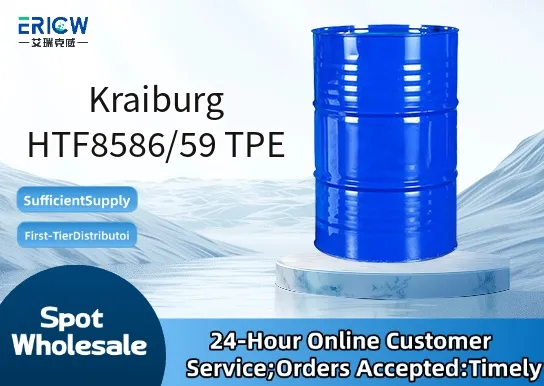
Thermoplastic elastomer (TPE) with excellent soft-touch feel and high elasticity for ergonomic design.
Good processability via injection molding and extrusion, enabling efficient high-volume manufacturing.
Outstanding resistance to UV exposure and thermal aging, supporting long-term outdoor and automotive use.
Low extractables and compliant with major food-contact regulations (EU 10/2011, FDA 21 CFR §177.2600).
Excellent adhesion to polypropylene (PP) and polyethylene (PE), facilitating overmolding without primers.
Automotive interior components: door trims, gear knobs, and steering wheel overlays.
Consumer electronics: protective cases, grips, and tactile buttons for handheld devices.
Household appliances: control dials, seals, and soft-grip handles for kitchen and laundry equipment.
Medical device housings and non-sterile patient interface components requiring skin-safe materials.
Industrial tools: ergonomic overmolded grips for hand tools and power tool housings.
| Chemical Type | Thermoplastic Elastomer (TPE) – SEBS-based |
| Product Form | Pellets |
| Appearance | Off-white to light beige, free-flowing granules |
| Primary Applications | Overmolding, soft-touch surfaces, sealing elements |
| Key Features | UV-stabilized, food-contact compliant, PP/PE bondable |
| Benefits | Reduced assembly steps, improved user comfort, recyclable thermoplastic processing |
| Processing Method | Injection molding, extrusion |
| Shore Hardness (A) | 59 ± 2 |
Q1: What is the primary function of Kraiburg HTF8586/59 TPE in compound formulations?
A: HTF8586/59 is a thermoplastic elastomer designed primarily as a compatibilizer and processing aid for TPE blends—especially those involving polyolefin-based matrices and polar elastomers. It helps improve phase adhesion, melt homogeneity, and overall mechanical consistency during extrusion or injection molding.
Q2: Is HTF8586/59 suitable for applications requiring food contact compliance?
A: While HTF8586/59 is formulated without intentionally added heavy metals or known allergens, it is not pre-certified for food contact use. End-use compliance must be verified by the compounder through full formulation testing and regulatory assessment per applicable regional requirements.
Q3: How does HTF8586/59 perform under elevated processing temperatures?
A: This grade exhibits good thermal stability during standard TPE processing—typically up to 220 °C for short residence times. Prolonged exposure above 230 °C may lead to gradual degradation, so optimized screw design and residence time control are recommended for consistent performance.
Q4: Can HTF8586/59 be used in overmolding applications with rigid PP or PE substrates?
A: Yes—HTF8586/59 is frequently selected for soft-touch overmolding onto polypropylene and polyethylene due to its balanced melt adhesion and interfacial compatibility. Bond strength depends on substrate surface energy, mold temperature, and process parameters, and may benefit from minor surface treatment or primer optimization.
Contact With Us:
E-mail: wangxingqiang@ericwchem.com
Have a Questions? Call Us:
Add:
Building A1, Jiete Industrial Park, Huangpu District, Guangzhou City, Guangdong Province, China