English
 Español
 tiếng việt
 русский
Excellent thermal stability for continuous use up to 135 °C.
Outstanding resistance to oils, greases, and common automotive fluids.
High elasticity with low compression set (<25% after 70 h at 125 °C).
Good processability via injection molding and extrusion without pre-drying.
Halogen-free formulation compliant with RoHS and REACH requirements.
Automotive under-hood seals and gaskets.
Fluid-handling hoses for coolant and brake systems.
Dynamic vibration-damping components in powertrain modules.
High-temperature cable jacketing for engine compartments.
Industrial coupling boots requiring oil and heat resistance.
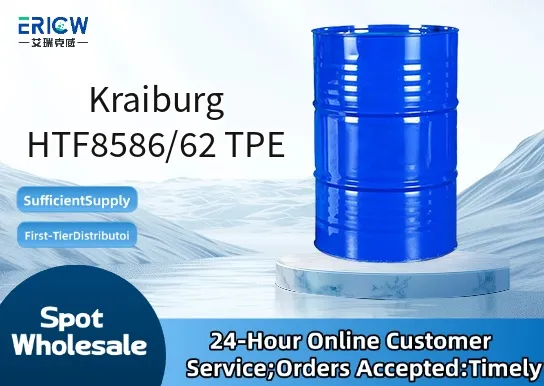
| Chemical Type | Thermoplastic Elastomer (TPE), Styrenic Block Copolymer (SBC)-based |
| Product Form | Pellets |
| Appearance | Opaque beige granules |
| Primary Applications | Seals, gaskets, dynamic elastomeric parts in high-heat environments |
| Key Features | Oil resistance, thermal stability, halogen-free, low compression set |
| Processing Method | Injection molding, extrusion |
| Recommended Drying | Not required; optional desiccant drying at 60–70 °C for <2 h if exposed to high humidity |
| Compliance | RoHS 2015/863/EU, REACH SVHC-free, ISO 9001 certified manufacturing |
Q1: What is the primary function of Kraiburg HTF8586/62 in TPE formulations?
A: HTF8586/62 is a high-performance thermoplastic elastomer modifier designed to enhance melt processability, improve surface finish, and increase elasticity retention in styrenic-based TPE compounds—particularly in demanding extrusion and injection molding applications.
Q2: Is HTF8586/62 compatible with common TPE base polymers such as SEBS and SBS?
A: Yes, HTF8586/62 exhibits excellent compatibility with hydrogenated and non-hydrogenated styrenic block copolymers (e.g., SEBS, SBS), as well as with polyolefin blends commonly used in soft-touch and overmolding TPE systems.
Q3: How does HTF8586/62 affect thermal stability during processing?
A: This grade is formulated for enhanced thermal stability, helping to reduce polymer degradation and minimize odor or discoloration during prolonged residence times at typical TPE processing temperatures (e.g., 180–230 °C).
Q4: Can HTF8586/62 be used in applications requiring skin contact or food-contact proximity?
A: While HTF8586/62 is not pre-certified for direct food contact or medical use, it is frequently selected for consumer-facing soft-touch components where low extractables and good odor profile are required—subject to final formulation validation by the compounder.
Contact With Us:
E-mail: wangxingqiang@ericwchem.com
Have a Questions? Call Us:
Add:
Building A1, Jiete Industrial Park, Huangpu District, Guangzhou City, Guangdong Province, China