English
 Español
 tiếng việt
 русский
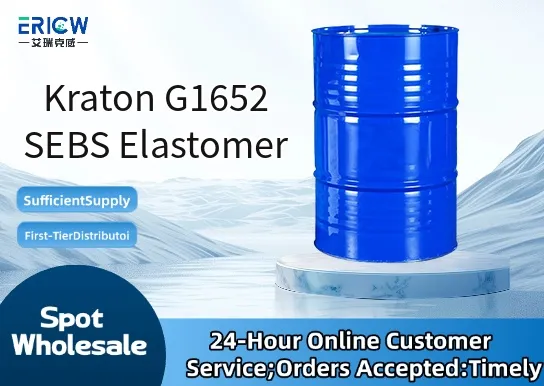
High melt strength and excellent melt stability for reliable processing in extrusion and injection molding.
Outstanding elasticity and recovery performance across a broad temperature range (–40 °C to +70 °C).
Good compatibility with polypropylene (PP) and polyethylene (PE), enabling robust thermoplastic vulcanizate (TPV) and TPE blends.
Low extractables and compliant with FDA 21 CFR §177.2600 for indirect food contact applications.
Enhanced UV resistance and long-term thermal aging stability without added stabilizers.
Soft-touch overmolding for automotive interior trim, including instrument panels and door handles.
Sealants and gasket compounds requiring compression set resistance and weatherability.
Medical tubing and non-sterile device components leveraging biocompatibility and clarity.
Consumer goods grips for power tools, personal care devices, and appliance housings.
Flexible packaging films requiring toughness, seal integrity, and low-temperature flexibility.
| Chemical Type | Styrene–ethylene/butylene–styrene (SEBS) triblock copolymer |
| Product Form | Pellets |
| Appearance | Off-white to light tan, free-flowing pellets |
| Primary Applications | Thermoplastic elastomer (TPE) formulations, soft-touch overmolding, sealants |
| Key Features | High elasticity, PP/PE compatibility, low extractables, FDA-compliant |
| Benefits | Improved processability, enhanced durability, regulatory readiness, recyclability |
| Storage Conditions | Store in original sealed packaging at 15–30 °C; protect from moisture and direct sunlight |
Q1: What is the primary functional role of Kraton G1652 in polymer formulations?
A: Kraton G1652 is a triblock copolymer thermoplastic elastomer based on styrene–ethylene/butylene–styrene (SEBS). It is primarily used as a compatibilizer and impact modifier in polyolefin-based systems, enhancing melt strength, toughness, and flexibility without compromising processability.
Q2: Is Kraton G1652 suitable for applications requiring FDA compliance or food-contact approval?
A: Kraton G1652 is manufactured under Good Manufacturing Practices and is commonly selected for food-contact applications where regulatory compliance is required. However, final regulatory status depends on the full formulation, processing conditions, and applicable jurisdiction—users must conduct their own due diligence and consult current regulatory guidelines.
Q3: How does Kraton G1652 differ from other SEBS grades like G1657 or G1701 in terms of performance?
A: Kraton G1652 offers a balanced combination of mid-range melt flow and moderate polystyrene content, resulting in good processability and mechanical performance in soft-touch and overmolding applications. Compared to higher-melt-flow grades, it provides greater melt strength; compared to higher-styrene grades, it delivers improved elasticity and lower hardness.
Q4: What are typical processing methods for Kraton G1652?
A: Kraton G1652 is compatible with standard thermoplastic processing techniques including injection molding, extrusion, and blow molding. It can be processed on conventional equipment without modification, though drying is recommended prior to processing to minimize moisture-related defects.
Contact With Us:
E-mail: wangxingqiang@ericwchem.com
Have a Questions? Call Us:
Add:
Building A1, Jiete Industrial Park, Huangpu District, Guangzhou City, Guangdong Province, China