English
 Español
 tiếng việt
 русский
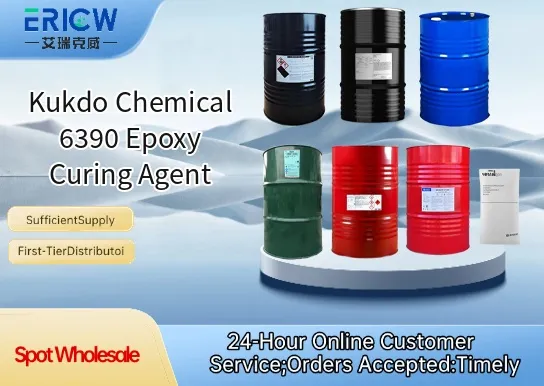
Low-viscosity liquid formulation for excellent mixing and processing with epoxy resins.
Fast room-temperature cure profile enabling high-throughput manufacturing.
Superior chemical resistance to solvents, acids, and alkalis after full cure.
Low exotherm during curing—ideal for thick-section casting and sensitive substrates.
Excellent adhesion to metals, composites, and concrete without primer requirement.
Structural adhesives for automotive and aerospace assembly.
High-performance potting and encapsulation compounds for electronics.
Repair mortars and industrial flooring systems.
Composite matrix resin for wind turbine blades and marine components.
Electrical insulation varnishes and coil impregnation formulations.
| Chemical Type | Amine-based aliphatic polyamine adduct |
| Product Form | Clear to pale yellow liquid |
| Appearance | Homogeneous, low-viscosity liquid |
| Density (25°C) | 0.94–0.97 g/cm³ |
| Amine Value | 210–230 mg KOH/g |
| Reactive Hydrogen Equivalent Weight | 85–95 g/eq |
| Storage Stability | 12 months at 25°C in sealed original container |
| Primary Applications | Room-temperature and elevated-temperature cured epoxy systems |
Q1: What is the primary chemical class and functional mechanism of Kukdo 6390?
A: Kukdo 6390 is a latent amine-based epoxy curing agent, designed to provide controlled reactivity at elevated temperatures while maintaining extended pot life at ambient conditions. It functions through thermal activation, enabling stepwise crosslinking of epoxy resins without premature gelation during processing.
Q2: Which epoxy resin systems is Kukdo 6390 typically compatible with?
A: Kukdo 6390 demonstrates broad compatibility with standard diglycidyl ether of bisphenol-A (DGEBA) and bisphenol-F (DGEBF) resins, as well as many modified and novolac-type epoxies. Performance may vary with highly sterically hindered or aliphatic epoxy structures, so formulation testing is recommended for critical applications.
Q3: What are typical processing conditions required for full cure with Kukdo 6390?
A: Full cure generally requires thermal post-curing, typically in the range of 120–160 °C for 30 minutes to 2 hours, depending on part geometry, film thickness, and desired final properties. Lower-temperature pre-cures (e.g., 80–100 °C) may be used to achieve handling strength prior to final cure.
Q4: How should Kukdo 6390 be handled and stored to maintain stability?
A: Store in original sealed containers under dry, cool conditions (below 25 °C) and protect from moisture, direct sunlight, and strong oxidizing agents. Once opened, minimize exposure to ambient humidity and use within recommended shelf-life windows; resealing with inert gas blanketing is advised for prolonged storage after opening.
Contact With Us:
E-mail: wangxingqiang@ericwchem.com
Have a Questions? Call Us:
Add:
Building A1, Jiete Industrial Park, Huangpu District, Guangzhou City, Guangdong Province, China