English
 Español
 tiếng việt
 русский
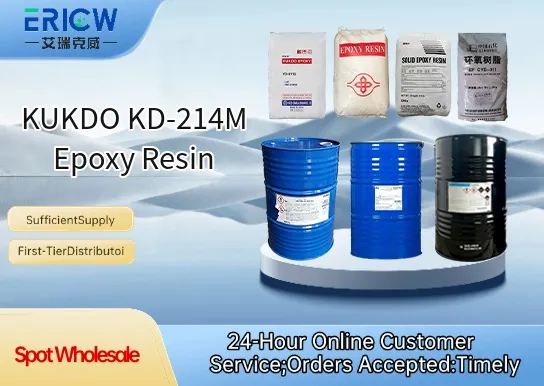
High reactivity with amine and anhydride curing agents for rapid gelation and short cycle times.
Excellent adhesion to metals, composites, and treated plastics without requiring primers.
Low viscosity (8,000–12,000 cP at 25°C) enabling easy processing via casting, impregnation, and resin transfer molding (RTM).
Good thermal stability with glass transition temperature (Tg) up to 130°C after post-cure.
Low chloride content (< 500 ppm), ensuring high electrical insulation performance and corrosion resistance.
Electrical encapsulation of transformers, reactors, and high-voltage insulators.
Structural bonding in wind turbine blade assembly and aerospace composite components.
Prepreg systems for carbon fiber reinforced polymer (CFRP) laminates in automotive lightweighting.
High-performance potting compounds for industrial sensors and power electronics modules.
Marine-grade protective coatings and corrosion-resistant linings for chemical storage tanks.
| Chemical Type | Bisphenol-A based liquid epoxy resin |
| Product Form | Clear to pale yellow viscous liquid |
| Appearance | Homogeneous, transparent, free from gels or suspended particles |
| Epoxy Equivalent Weight (EEW) | 185–195 g/eq |
| Viscosity (25°C) | 8,000–12,000 cP |
| Chloride Content | < 500 ppm |
| Softening Point | 12–18°C |
| Storage Stability | 12 months at < 25°C in unopened original containers |
Q1: What is the primary application niche for KD-214M?
A: KD-214M is a liquid bisphenol-A based epoxy resin designed primarily for high-performance coating systems—especially industrial maintenance coatings, corrosion-resistant linings, and protective topcoats where balanced reactivity, adhesion, and chemical resistance are required.
Q2: How does KD-214M compare to standard DGEBA resins in terms of viscosity and handling?
A: KD-214M exhibits lower viscosity than conventional solid DGEBA resins at ambient temperature, offering improved flow and wetting characteristics without requiring elevated processing temperatures or high-boiling diluents—making it well-suited for solvent-free or low-solvent formulations.
Q3: Is KD-214M compatible with common amine and anhydride curing agents?
A: Yes—KD-214M demonstrates broad compatibility with aliphatic and cycloaliphatic amines, polyamides, and aromatic anhydrides. Its reactivity profile supports both ambient-cure and thermal-cure systems, allowing formulation flexibility across different end-use requirements.
Q4: What are typical storage conditions to maintain product stability?
A: Store KD-214M in tightly sealed original containers at temperatures between 10°C and 30°C, away from direct sunlight and moisture. Prolonged exposure to freezing temperatures may cause crystallization, which is reversible upon gentle warming and thorough homogenization.
Contact With Us:
E-mail: wangxingqiang@ericwchem.com
Have a Questions? Call Us:
Add:
Building A1, Jiete Industrial Park, Huangpu District, Guangzhou City, Guangdong Province, China