English
 Español
 tiếng việt
 русский
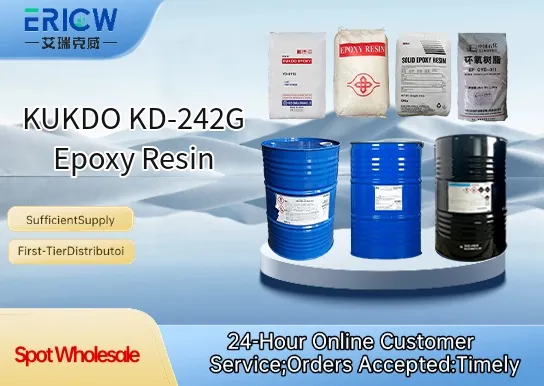
High-performance bisphenol-A based liquid epoxy resin with excellent mechanical strength and chemical resistance.
Low viscosity for easy handling, mixing, and impregnation into fiber reinforcements.
Optimized reactivity profile enabling reliable cure control with standard amine or anhydride hardeners.
Superior adhesion to metals, composites, and cured concrete substrates.
Good electrical insulation properties and thermal stability up to 130 °C continuous service.
Structural adhesives for automotive and aerospace bonding applications.
Matrix resin for pultruded fiberglass profiles and composite laminates.
Electrical encapsulation and potting compounds for power electronics and transformers.
High-durability coatings and linings for chemical storage tanks and industrial flooring.
Wind turbine blade bonding and repair systems requiring fatigue-resistant performance.
| Chemical Type | Bisphenol-A epoxy resin |
| Product Form | Clear to pale yellow low-viscosity liquid |
| Appearance | Homogeneous, transparent liquid without sediment |
| Epoxy Equivalent Weight (EEW) | 185–195 g/eq |
| Viscosity at 25 °C | 12,000–15,000 cP |
| Chloride Content | ≤ 500 ppm |
| Volatiles Content | ≤ 0.3 wt% |
| Storage Stability | 12 months at ≤ 25 °C in sealed original container |
Q1: What is the primary application of KD-242G in epoxy systems?
A: KD-242G is a glycidyl ether-modified epoxy resin designed primarily as a reactive diluent and viscosity modifier for standard bisphenol-A or bisphenol-F based epoxy resins. It helps improve workability and flow without significantly compromising crosslink density or thermal stability.
Q2: How does KD-242G affect pot life and cure kinetics?
A: As a monofunctional reactive diluent, KD-242G generally extends pot life compared to unmodified epoxy resins, especially at ambient temperatures. Its incorporation may slightly delay gel time and reduce overall exotherm intensity, allowing more processing flexibility—though final cure speed remains highly dependent on the selected hardener and thermal profile.
Q3: Is KD-242G compatible with common amine and anhydride hardeners?
A: Yes, KD-242G demonstrates broad compatibility with conventional aliphatic and aromatic amines, as well as cyclic anhydrides. It participates in the curing reaction via its epoxide group, contributing to network formation while reducing system viscosity.
Q4: Does KD-242G impact the chemical resistance of cured epoxy formulations?
A: When used within typical dosage ranges, KD-242G maintains good chemical resistance in the final network—particularly against polar solvents and weak acids. However, excessive loading may reduce crosslink density and thus moderately affect long-term resistance to aggressive alkaline environments or elevated-temperature solvent exposure.
Contact With Us:
E-mail: wangxingqiang@ericwchem.com
Have a Questions? Call Us:
Add:
Building A1, Jiete Industrial Park, Huangpu District, Guangzhou City, Guangdong Province, China