English
 Español
 tiếng việt
 русский
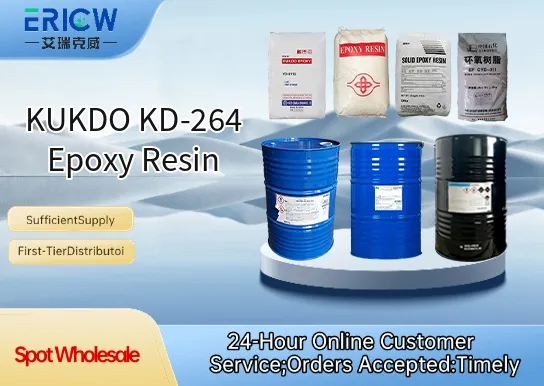
Highly reactive bisphenol-A based liquid epoxy resin with excellent compatibility with standard amine and anhydride curing agents.
Low viscosity (10,000–12,000 cP at 25°C) enabling easy processing, impregnation, and mixing without solvent dilution.
Superior mechanical strength and chemical resistance after full cure, especially against alkalis and solvents.
Consistent batch-to-batch quality with strict control of epoxide equivalent weight (EEW: 183–189 g/eq) and hydrolyzable chlorine content (<0.02 wt%).
Optimized for high-gloss, low-shrinkage coatings and structural composites requiring dimensional stability.
Electrical insulation systems for dry-type transformers and cast resin bushings.
High-performance protective coatings for marine, offshore, and industrial steel structures.
Structural adhesives in aerospace and automotive bonding applications.
Matrix resin for fiber-reinforced polymer (FRP) composites used in wind turbine blades and pressure vessels.
Potting and encapsulation compounds for electronic components and LED modules.
| Chemical Type | Bisphenol-A epoxy resin |
| Product Form | Clear to pale yellow viscous liquid |
| Appearance | Transparent, homogeneous liquid, free from gel or sediment |
| Epoxide Equivalent Weight (EEW) | 183–189 g/eq |
| Viscosity (25°C) | 10,000–12,000 cP |
| Hydrolyzable Chlorine | ≤0.02 wt% |
| Softening Point | Not applicable (liquid at room temperature) |
| Density (25°C) | 1.16–1.18 g/cm³ |
Q1: What is the primary function of KD-264 in epoxy formulations?
A: KD-264 is a reactive diluent designed to reduce viscosity and improve processability of standard bisphenol-A or bisphenol-F based epoxy resins without significantly compromising final crosslink density or thermal performance.
Q2: Is KD-264 suitable for high-gloss coatings and electrical encapsulation applications?
A: Yes — its low volatility, good compatibility with common epoxy hardeners, and ability to support high crosslink efficiency make it well-suited for demanding coating, potting, and encapsulation systems where surface aesthetics and dielectric integrity are critical.
Q3: How does KD-264 compare to non-reactive diluents in terms of VOC content and film properties?
A: As a reactive diluent, KD-264 becomes chemically bound into the cured network, resulting in near-zero VOC contribution and superior retention of mechanical strength, chemical resistance, and adhesion compared to solvent- or non-reactive plasticizer-based alternatives.
Q4: What types of curing agents is KD-264 typically compatible with?
A: KD-264 demonstrates broad compatibility with amine-based hardeners (aliphatic, cycloaliphatic, and aromatic), as well as anhydride and phenolic curing systems — formulation adjustments may be needed depending on reactivity and stoichiometry requirements.
Q5: Can KD-264 be used in food-contact or potable water-related epoxy systems?
A: KD-264 is not pre-approved for direct food-contact applications; suitability for such uses depends on full system evaluation, including regulatory review of the complete cured formulation by end-use authorities.
Contact With Us:
E-mail: wangxingqiang@ericwchem.com
Have a Questions? Call Us:
Add:
Building A1, Jiete Industrial Park, Huangpu District, Guangzhou City, Guangdong Province, China