English
 Español
 tiếng việt
 русский
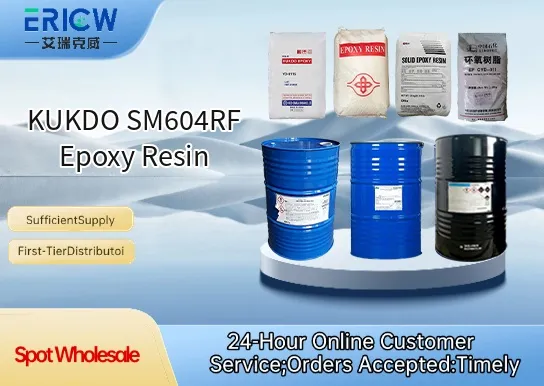
High reactivity with amine and anhydride hardeners for rapid cure at ambient or elevated temperatures.
Excellent adhesion to metals, composites, and cured epoxy substrates without surface priming.
Low viscosity (12,000–15,000 cP at 25°C) enabling easy processing, impregnation, and void-free casting.
Superior electrical insulation properties with high dielectric strength and volume resistivity.
Good thermal stability with glass transition temperature (Tg) up to 125°C after full cure.
Electrical encapsulation of power modules, IGBTs, and high-voltage sensors.
Structural adhesive formulations for aerospace composite bonding and repair.
Underfill and glob-top protection for fine-pitch semiconductor packaging.
High-performance potting compounds for outdoor LED drivers and renewable energy inverters.
Matrix resin for carbon fiber reinforced laminates requiring low exotherm and dimensional stability.
| Chemical Type | Diglycidyl ether of bisphenol-F (DGEBF) |
| Product Form | Clear, pale yellow liquid |
| Appearance | Homogeneous, transparent, free from gels or suspended particles |
| Epoxy Equivalent Weight (EEW) | 175–185 g/eq |
| Viscosity (25°C) | 12,000–15,000 cP |
| Chloride Content | ≤ 500 ppm |
| Softening Point | Not applicable (liquid at room temperature) |
| Storage Stability | 12 months at ≤ 25°C in sealed original container |
Q1: What is the primary functional role of KUKDO SM604RF in epoxy formulations?
A: KUKDO SM604RF is a reactive diluent designed to reduce viscosity and improve processability of standard bisphenol-A or bisphenol-F based epoxy resins without significantly compromising final crosslink density or thermal performance.
Q2: Is SM604RF suitable for high-gloss, low-VOC coating systems?
A: Yes — as a mono-functional reactive diluent with low volatility and no added solvents, SM604RF supports VOC-reduced formulations while maintaining film integrity and surface aesthetics in decorative and protective coatings.
Q3: How does SM604RF affect cure kinetics and pot life when blended with conventional epoxy hardeners?
A: It typically extends working time slightly due to reduced system reactivity, but maintains compatibility with common amine, anhydride, and phenolic hardeners. Final cure profile remains adjustable through temperature and catalyst selection.
Q4: Can SM604RF be used in electrical encapsulation or potting applications?
A: Yes — its low ionic impurity content and ability to yield low-shrinkage, well-adhered cured networks make it suitable for selected encapsulation grades, particularly where improved flow and reduced stress are required.
Contact With Us:
E-mail: wangxingqiang@ericwchem.com
Have a Questions? Call Us:
Add:
Building A1, Jiete Industrial Park, Huangpu District, Guangzhou City, Guangdong Province, China