English
 Español
 tiếng việt
 русский
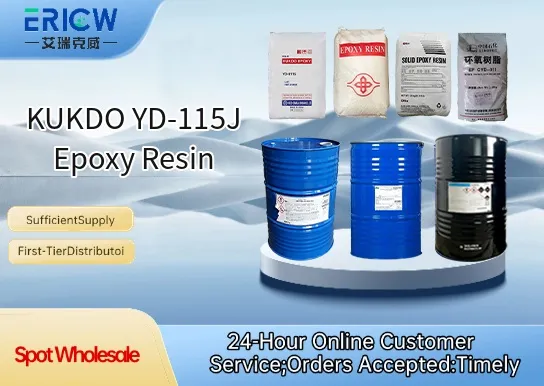
High-purity bisphenol-A based liquid epoxy resin with low chlorine content.
Excellent thermal stability and consistent reactivity for reliable curing performance.
Low viscosity enables easy handling, mixing, and impregnation in composite processes.
Superior electrical insulation properties suitable for high-performance electronic encapsulation.
Good adhesion to metals, glass fibers, and common engineering substrates.
Electrical and electronic encapsulants for transformers, sensors, and PCB potting.
Structural adhesives in automotive and aerospace assembly.
Matrix resin for filament-wound composite pressure vessels and pipes.
Coating formulations for corrosion-resistant industrial linings and tank interiors.
High-voltage insulating castings and bushing components.
| Chemical Type | Bisphenol-A epoxy resin |
| Product Form | Clear to pale yellow liquid |
| Appearance | Transparent, homogeneous liquid |
| Epoxy Equivalent Weight (EEW) | 184–190 g/eq |
| Viscosity (25°C) | 10,000–14,000 cP |
| Chlorine Content | ≤ 700 ppm |
| Softening Point | 10–15°C |
| Storage Stability | ≥ 12 months at 25°C in sealed container |
Q1: What is the primary functional role of YD-115J in epoxy formulations?
A: YD-115J is a liquid bisphenol-A type epoxy resin designed primarily as a reactive diluent and viscosity modifier. It reduces formulation viscosity without significantly compromising crosslink density or thermal performance, enabling improved processability in coating, adhesive, and encapsulation applications.
Q2: Is YD-115J suitable for high-gloss, UV-stable coatings?
A: While YD-115J contributes to film formation and gloss development, it is not inherently UV-resistant. For outdoor or UV-exposed applications, it should be formulated with appropriate UV stabilizers and/or topcoated with UV-protective clear coats to ensure long-term gloss retention and color stability.
Q3: How does YD-115J compare to standard DGEBA resins in terms of reactivity and cure profile?
A: YD-115J exhibits reactivity comparable to conventional liquid DGEBA resins but offers lower initial viscosity, which can enhance mixing efficiency and filler wetting. Its cure kinetics are largely dependent on the selected hardener system—amine-cured formulations typically achieve full cure at ambient to moderate elevated temperatures, while anhydride systems may require higher post-cure conditions.
Q4: Can YD-115J be used in food-contact compliant epoxy systems?
A: YD-115J is intended for industrial use and is not pre-certified for food contact. Any application involving food contact requires full formulation-level evaluation and compliance verification against applicable regional regulations by the end-user or qualified regulatory consultant.
Contact With Us:
E-mail: wangxingqiang@ericwchem.com
Have a Questions? Call Us:
Add:
Building A1, Jiete Industrial Park, Huangpu District, Guangzhou City, Guangdong Province, China