English
 Español
 tiếng việt
 русский
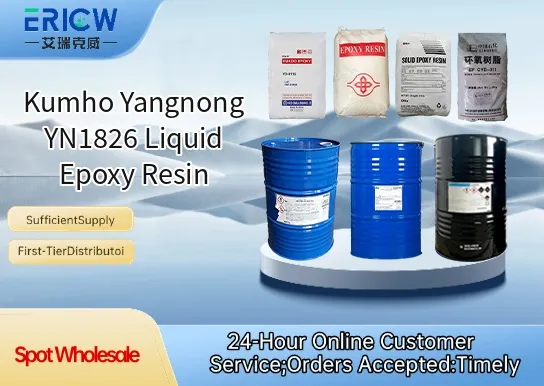
Low viscosity for excellent processability and easy handling in casting, potting, and impregnation operations.
High purity with minimal gel content, ensuring consistent reactivity and reliable crosslinking performance.
Optimized epoxy equivalent weight (EEW) for balanced cure speed and thermal-mechanical properties.
Good compatibility with common amine and anhydride curing agents used in industrial formulations.
Stable shelf life under recommended storage conditions (25 °C, dry, dark environment).
Electrical insulation systems for motors, transformers, and generators.
Potting and encapsulation of electronic components and PCBs.
Structural adhesives requiring high bond strength and environmental resistance.
Composite matrix resin for fiber-reinforced laminates in wind energy and transportation sectors.
Protective coatings for metal substrates in corrosion-prone industrial environments.
| Chemical Type | Bisphenol-A based liquid epoxy resin |
| Product Form | Clear to pale yellow low-viscosity liquid |
| Appearance | Homogeneous, transparent, free from gels or suspended particles |
| Epoxy Equivalent Weight (EEW) | 180–190 g/eq |
| Viscosity at 25 °C | 10,000–14,000 cP |
| Chloride Content | ≤ 700 ppm |
| Volatiles Content | ≤ 0.3 wt% |
| Storage Stability | ≥ 12 months at ≤ 25 °C in sealed container |
Q1: What is the typical viscosity range of YN1826 at 25°C?
A: YN1826 is a low-to-moderate viscosity liquid epoxy resin, designed for ease of handling and compatibility with common mixing and processing equipment. Its viscosity allows for good flow characteristics without requiring excessive heating or dilution.
Q2: Is YN1826 suitable for high-gloss coating applications?
A: Yes — YN1826 delivers excellent clarity, low color, and good compatibility with standard epoxy hardeners and additives, making it well-suited for high-performance decorative and protective coatings where gloss retention and surface uniformity are critical.
Q3: How does YN1826 compare to standard DGEBA-type resins in terms of reactivity?
A: YN1826 exhibits reactivity broadly comparable to conventional bisphenol-A based liquid epoxy resins, enabling compatibility with widely used amine, anhydride, and phenolic curing agents. Cure profiles can be adjusted through catalyst selection and thermal treatment without requiring specialized formulation changes.
Q4: Can YN1826 be used in electrical encapsulation compounds?
A: Yes — its low ionic impurity content, stable dielectric properties, and ability to achieve high crosslink density after curing make YN1826 a viable candidate for medium-voltage electrical insulation and encapsulation systems, especially when paired with appropriate fillers and hardeners.
Contact With Us:
E-mail: wangxingqiang@ericwchem.com
Have a Questions? Call Us:
Add:
Building A1, Jiete Industrial Park, Huangpu District, Guangzhou City, Guangdong Province, China