English
 Español
 tiếng việt
 русский
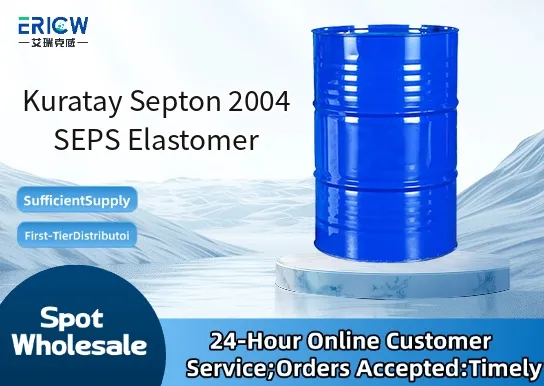
Thermoplastic elastomer based on styrene–ethylene/propylene–styrene (SEPS) triblock copolymer architecture.
Exceptional clarity and low haze, ideal for transparent or translucent end-use applications.
Superior UV resistance and long-term thermal stability without added stabilizers.
Excellent melt processability via extrusion, injection molding, and overmolding onto PP, PS, and other thermoplastics.
Low compression set and high elastic recovery at room and elevated temperatures.
Soft-touch grips and ergonomic overmolds for power tools and consumer electronics.
Transparent medical tubing and seals requiring biocompatibility and clarity.
High-performance adhesives and pressure-sensitive adhesive (PSA) formulations.
Flexible, durable components in automotive interior trim and lighting diffusers.
Premium packaging films and sealants where optical quality and flexibility are critical.
| Chemical Type | Styrene–Ethylene/Propylene–Styrene (SEPS) Triblock Copolymer |
| Product Form | Pellets |
| Appearance | Translucent, off-white to pale yellow granules |
| Styrene Content (wt%) | Approx. 30% |
| Melt Flow Rate (230°C/2.16 kg) | 15–25 g/10 min |
| Specific Gravity (23°C) | 0.90–0.92 g/cm³ |
| Hardness (Shore A) | 35–45 |
| Key Features | Clarity, elasticity, thermal stability, processability |
Q1: What distinguishes Kuratay Septon 2004 from other SEPS-based thermoplastic elastomers?
A: Kuratay Septon 2004 is a linear triblock SEPS (styrene–ethylene/propylene–styrene) elastomer characterized by its balanced combination of high elasticity, excellent clarity, and superior UV and thermal stability compared to many conventional SEBS or SIS grades. Its hydrogenated mid-block provides enhanced resistance to oxidation and aging, making it particularly suitable for demanding outdoor and long-life applications.
Q2: Is Kuratay Septon 2004 compatible with common polyolefins such as PP and PE?
A: Yes — Septon 2004 exhibits good compatibility with polypropylene (PP) and low-density polyethylene (LDPE), especially when used as a softening or impact-modifying component in TPO blends. Compatibility can be further optimized through melt compounding at appropriate temperatures and residence times, and minor compatibilizers may be considered depending on the final performance targets.
Q3: What are typical processing methods for this grade?
A: Kuratay Septon 2004 is readily processable via standard thermoplastic techniques including injection molding, extrusion, and overmolding. It demonstrates good melt flow and low die swell, enabling stable production of thin-walled or highly detailed parts. Drying prior to processing is recommended to maintain optimal mechanical properties and surface quality.
Q4: Can it be used in applications requiring skin contact or medical device components?
A: While Kuratay Septon 2004 is not pre-certified for medical use, it is manufactured under strict quality control and complies with general food-contact relevant polymer specifications. For skin-contact or medical applications, end-use qualification—including biocompatibility testing and regulatory review—is required by the formulator or device manufacturer.
Contact With Us:
E-mail: wangxingqiang@ericwchem.com
Have a Questions? Call Us:
Add:
Building A1, Jiete Industrial Park, Huangpu District, Guangzhou City, Guangdong Province, China