English
 Español
 tiếng việt
 русский
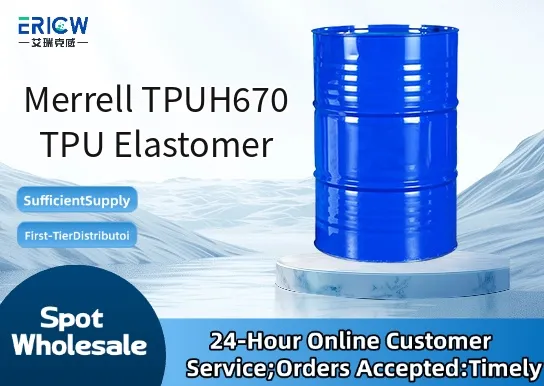
Excellent abrasion resistance for demanding mechanical environments
High tensile strength and elongation at break for dynamic component performance
Good low-temperature flexibility down to –30 °C
Outstanding oil, grease, and hydrocarbon resistance
Processable via extrusion, injection molding, and calendering
Industrial hoses and fluid transfer tubing
Seals, gaskets, and dynamic sealing components
Wear-resistant conveyor belts and rollers
Automotive under-hood protective boots and covers
High-performance footwear midsoles and outsoles
| Chemical Type | Thermoplastic Polyurethane (TPU), polyester-based |
| Product Form | Pellets |
| Appearance | Off-white to light amber translucent granules |
| Primary Applications | Extruded profiles, molded seals, flexible industrial parts |
| Key Features | Abrasion resistance, oil resistance, elasticity, processability |
| Benefits | Extended service life in harsh environments, recyclable thermoplastic processing |
| Processing Temperature Range | 180–220 °C (recommended) |
| Density (ASTM D792) | 1.20–1.22 g/cm³ |
Q1: What are the key processing advantages of Merrell TPUH670 compared to conventional TPU grades?
A: Merrell TPUH670 offers enhanced melt flow and lower processing temperatures, enabling smoother extrusion and injection molding—particularly beneficial for thin-walled or highly detailed parts. Its balanced hardness and elasticity also support reduced cycle times without compromising dimensional stability.
Q2: Is Merrell TPUH670 suitable for applications requiring good abrasion resistance and flexibility at low temperatures?
A: Yes—TPUH670 delivers excellent dynamic mechanical performance, including high resilience and retained flexibility down to sub-zero temperatures. It is widely selected for demanding elastomeric components such as seals, gaskets, and wearable device housings where long-term flex fatigue resistance is critical.
Q3: Can Merrell TPUH670 be blended with other thermoplastics or additives?
A: Merrell TPUH670 exhibits good compatibility with common engineering thermoplastics like polyesters and certain polyolefins when used as a modifier. It also accepts standard TPU-compatible additives—including UV stabilizers, antistatic agents, and color concentrates—though compatibility should always be verified in the final formulation under intended processing conditions.
Q4: How does moisture sensitivity affect handling and processing of Merrell TPUH670?
A: As a hygroscopic thermoplastic polyurethane, Merrell TPUH670 must be dried prior to processing—typically using desiccant dryers at 70–80 °C for 2–4 hours—to prevent surface defects, hydrolysis-related molecular weight loss, and compromised mechanical properties during melt processing.
Contact With Us:
E-mail: wangxingqiang@ericwchem.com
Have a Questions? Call Us:
Add:
Building A1, Jiete Industrial Park, Huangpu District, Guangzhou City, Guangdong Province, China