English
 Español
 tiếng việt
 русский
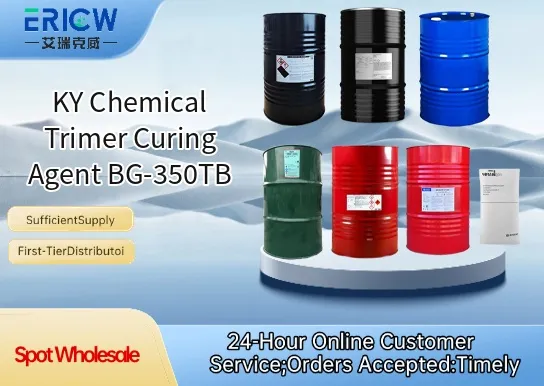
Highly reactive aliphatic trimerized isocyanate with excellent storage stability.
Low viscosity enables easy handling, precise metering, and uniform mixing with polyols.
Delivers superior weather resistance and UV stability in final cured coatings and adhesives.
Free of solvents and aromatic isocyanates—compliant with stringent VOC and REACH requirements.
Enables rapid room-temperature cure kinetics without compromising pot life control.
High-performance two-component polyurethane coatings for automotive clearcoats and refinishes.
Durable industrial maintenance coatings for metal, concrete, and composite substrates.
UV-resistant topcoats for architectural façades and exterior plastic trim.
Flexible yet tough adhesives and sealants for transportation and wind energy components.
Clear protective layers for wood flooring and high-gloss decorative surfaces.
| Chemical Type | Aliphatic isocyanurate trimer (HDI-based) |
| Product Form | Liquid |
| Appearance | Colorless to pale yellow transparent liquid |
| NCO Content (wt%) | 18.5–19.2% |
| Viscosity at 25°C (mPa·s) | 800–1,200 |
| Density at 25°C (g/cm³) | 1.16–1.18 |
| Flash Point (°C, closed cup) | 145–155 |
| Storage Stability (unopened, 25°C) | ≥12 months |
Q1: What types of resin systems is BG-350TB compatible with?
A: BG-350TB is specifically designed as a trimer-based curing agent for hydroxyl-functional acrylics, polyesters, and alkyds. It is commonly used in high-performance coil coating, automotive refinish, and industrial baking enamel formulations where enhanced crosslink density and thermal stability are required.
Q2: How does BG-350TB differ from conventional melamine or blocked isocyanate curing agents?
A: Unlike melamine resins, BG-350TB offers improved hydrolytic stability and reduced formaldehyde release during cure. Compared to blocked isocyanates, it provides faster cure response at moderate baking temperatures (typically 140–180 °C) without requiring strong acid catalysts, supporting more flexible formulation design and reduced VOC potential.
Q3: What is the typical dosage range for BG-350TB in a coating formulation?
A: Dosage depends on the hydroxyl value and molecular weight of the resin system, but BG-350TB is typically used at low concentrations—generally ranging from 0.1% to 2% by weight relative to total solids—to achieve full cure and optimal film properties.
Q4: Does BG-350TB require an external catalyst to function effectively?
A: While BG-350TB exhibits inherent thermal reactivity, its cure kinetics can be fine-tuned using conventional acid catalysts (e.g., p-toluenesulfonic acid or dinonylnaphthalene sulfonic acid) when lower bake temperatures or shorter dwell times are needed. Catalyst selection and level should be optimized per specific formulation and process conditions.
Contact With Us:
E-mail: wangxingqiang@ericwchem.com
Have a Questions? Call Us:
Add:
Building A1, Jiete Industrial Park, Huangpu District, Guangzhou City, Guangdong Province, China