English
 Español
 tiếng việt
 русский
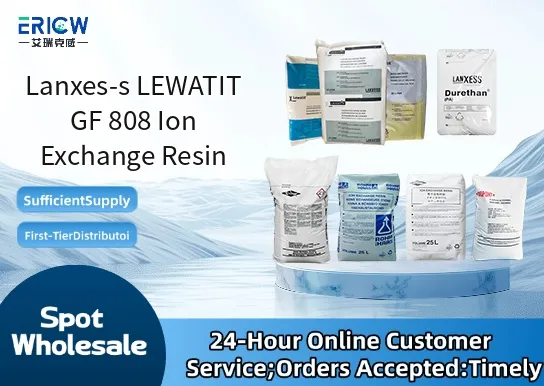
Highly stable macroporous polystyrene-divinylbenzene matrix engineered for superior mechanical and osmotic shock resistance.
Optimized uniform bead size distribution ensures low pressure drop and consistent hydraulic performance in fixed-bed systems.
Exceptional chemical stability across wide pH range (0–14), enabling reliable operation in aggressive regeneration environments.
Low fines generation and high attrition resistance prolong column service life and reduce operational downtime.
Designed for efficient removal of multivalent anions including sulfate, nitrate, chromate, and arsenate from process streams.
Removal of sulfate and nitrate from industrial wastewater prior to discharge or reuse.
Polishing step in pharmaceutical water systems (PW/WFI) for trace anion control.
Treatment of flue gas desulfurization (FGD) blowdown to meet stringent sulfate discharge limits.
Pre-treatment for reverse osmosis systems to prevent scaling by multivalent anions.
Recovery and separation of valuable anions (e.g., molybdate, tungstate) in hydrometallurgical processes.
| Chemical Type | Strong Base Anion Exchange Resin (Type I, Macroporous) |
| Product Form | Moist, sodium form (Cl⁻ form available on request) |
| Appearance | Uniform amber spherical beads |
| Functional Group | Quaternary ammonium (–N⁺(CH₃)₃) |
| Matrix Structure | Macroporous polystyrene-divinylbenzene copolymer |
| Mean Bead Size | 0.55–0.75 mm |
| Moisture Content | 48–55 % (as shipped) |
| Ion Exchange Capacity (Cl⁻ form) | ≥ 1.1 eq/L (dry) |
Q1: What is the primary functional group and ionic form of LEWATIT GF 808?
A: LEWATIT GF 808 is a strongly acidic cation exchange resin based on a sulfonated polystyrene-divinylbenzene matrix, supplied in the sodium (Na⁺) form for general-purpose softening and selective metal ion removal applications.
Q2: Is LEWATIT GF 808 suitable for food-grade or pharmaceutical water treatment?
A: Yes — LEWATIT GF 808 is manufactured and tested to meet requirements for use in systems producing potable water and process water for food and pharmaceutical applications, subject to proper regeneration, validation, and compliance with applicable local regulatory frameworks.
Q3: How does GF 808 compare to standard gel-type cation resins in terms of kinetic performance and fouling resistance?
A: GF 808 features a macroporous structure that provides improved mass transfer kinetics and enhanced tolerance to organic fouling and suspended solids compared to conventional gel-type resins, making it particularly suitable for challenging feedwaters with moderate organic content or variable quality.
Q4: What regeneration chemicals and typical conditions are recommended for LEWATIT GF 808?
A: Sodium form GF 808 is commonly regenerated with aqueous sodium chloride (NaCl) solution. Regeneration efficiency depends on concentration, flow rate, contact time, and temperature; best practice involves optimizing these parameters based on system design and service cycle performance rather than applying fixed universal settings.
Contact With Us:
E-mail: wangxingqiang@ericwchem.com
Have a Questions? Call Us:
Add:
Building A1, Jiete Industrial Park, Huangpu District, Guangzhou City, Guangdong Province, China