English
 Español
 tiếng việt
 русский
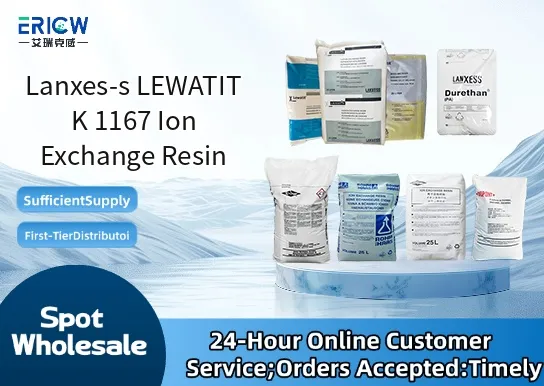
Highly selective for potassium ions (K⁺) in mixed-cation environments.
Optimized macroporous polystyrene-divinylbenzene matrix for enhanced kinetics and fouling resistance.
Excellent chemical and thermal stability across pH 0–14 and temperatures up to 120 °C.
Low pressure drop design enables efficient operation in high-flow industrial systems.
Regenerable with standard KCl or NaCl solutions, supporting sustainable process cycles.
Potassium removal and recovery in pharmaceutical wastewater streams.
Selective K⁺ separation in lithium extraction from brine leachates.
Final polishing of ultrapure water systems requiring ultra-low potassium contamination.
Process water conditioning in battery-grade cathode material manufacturing.
Ion-specific pre-concentration prior to ICP-MS analysis in environmental testing labs.
| Chemical Type | Macroporous, potassium-selective chelating resin |
| Product Form | Moist, spherical beads |
| Appearance | Light amber to brown, uniform spherical particles |
| Functional Group | Phosphonic acid derivative |
| Particle Size Range | 0.3–1.2 mm |
| Moisture Content | Approx. 45–50% (as shipped) |
| Maximum Operating Temperature | 120 °C |
| pH Stability Range | 0–14 |
Q1: What is the primary functional group and ionic form of LEWATIT K 1167?
A: LEWATIT K 1167 is a strongly acidic cation exchange resin in the sodium form, featuring sulfonic acid functional groups grafted onto a styrene-divinylbenzene copolymer matrix.
Q2: In which types of water treatment applications is this resin most commonly deployed?
A: It is widely used for softening, demineralization, and selective removal of heavy metal cations in industrial process water, boiler feedwater, and ultrapure water systems—particularly where high chemical stability and regeneration efficiency are required.
Q3: How does LEWATIT K 1167 compare to gel-type resins in terms of kinetic performance and fouling resistance?
A: As a macroporous resin, K 1167 offers superior kinetics for large or charged ions and enhanced resistance to organic fouling and osmotic shock compared with conventional gel-type cation exchangers—making it suitable for challenging feedwaters with variable quality.
Q4: What regeneration chemicals are compatible with this resin, and what are typical operational considerations?
A: Sodium chloride is the standard regenerant for softening mode; hydrochloric acid may be used for full demineralization. Regeneration efficiency depends on contact time, concentration, temperature, and flow distribution—uniform bed expansion and controlled rinse cycles are recommended to maintain long-term capacity.
Contact With Us:
E-mail: wangxingqiang@ericwchem.com
Have a Questions? Call Us:
Add:
Building A1, Jiete Industrial Park, Huangpu District, Guangzhou City, Guangdong Province, China