English
 Español
 tiếng việt
 русский
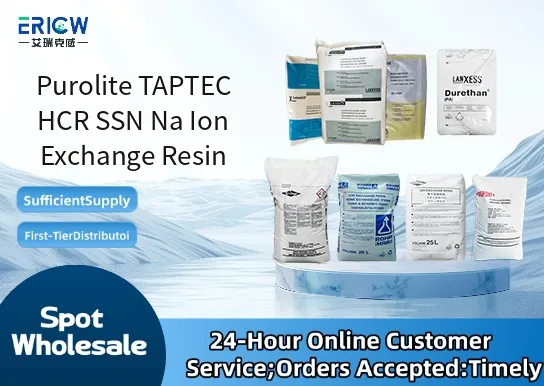
Highly uniform spherical beads ensuring consistent hydraulic performance and low pressure drop.
Superior chemical stability in strong acid and oxidizing environments, extending service life.
Optimized for high-capacity sodium form operation with excellent regeneration efficiency.
Low fines generation and exceptional physical durability under repeated swelling/shrinking cycles.
Manufactured to strict ISO 9001 quality standards with full traceability and batch documentation.
Softening of industrial boiler feedwater in power generation facilities.
Pretreatment for reverse osmosis (RO) systems in pharmaceutical water production.
Sodium cycle demineralization in food & beverage processing plants.
Process water conditioning for textile dyeing and finishing operations.
Residential and commercial water softening systems requiring reliable, low-maintenance performance.
| Chemical Type | Strong Acid Cation (SAC), Sulfonic Acid Group |
| Product Form | Na⁺ form (pre-charged) |
| Appearance | Uniform amber spherical beads |
| Functional Group | –SO₃⁻Na⁺ |
| Moisture Content | 45–50% (as shipped) |
| Particle Size Range | 0.3–1.2 mm |
| Uniformity Coefficient | ≤ 1.6 |
| Maximum Operating Temperature | 120 °C (248 °F) |
Q1: What is the primary functional form of Purolite TAPTEC HCR SSN resin upon delivery?
A: Purolite TAPTEC HCR SSN is supplied in the sodium (Na⁺) form, making it ready for immediate use in softening applications without requiring pre-conditioning with sodium chloride.
Q2: How does TAPTEC HCR SSN differ from standard strong acid cation resins in terms of physical structure and performance?
A: TAPTEC HCR SSN features a highly uniform spherical bead morphology and a macroporous polystyrene-divinylbenzene matrix, which enhances kinetic efficiency, reduces pressure drop, and improves resistance to fouling compared to conventional gel-type resins—especially in feedwaters containing organic matter or suspended solids.
Q3: Is this resin suitable for use in high-purity water systems such as those found in pharmaceutical or electronics manufacturing?
A: While TAPTEC HCR SSN is optimized for robust softening in demanding industrial feedwaters, it is not specifically designed or validated for final polishing stages in ultrapure water (UPW) systems; for such applications, dedicated low-leach, nuclear-grade, or UPW-certified resins are recommended.
Q4: Can TAPTEC HCR SSN be regenerated with common salt (NaCl), and what regeneration efficiency can be expected?
A: Yes, the resin is fully regenerable using aqueous sodium chloride solutions. It exhibits high regeneration efficiency and consistent capacity recovery over multiple cycles when operated within recommended service flow rates and regenerant dosage guidelines.
Contact With Us:
E-mail: wangxingqiang@ericwchem.com
Have a Questions? Call Us:
Add:
Building A1, Jiete Industrial Park, Huangpu District, Guangzhou City, Guangdong Province, China