English
 Español
 tiếng việt
 русский
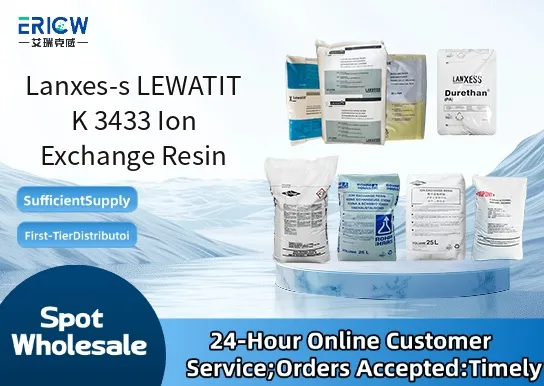
Highly selective for potassium (K⁺) and ammonium (NH₄⁺) ions in complex aqueous matrices.
Optimized macroporous polystyrene-divinylbenzene matrix ensures excellent kinetic performance and resistance to fouling.
Stable under repeated regeneration cycles with standard acid or salt solutions, supporting long service life.
Low pressure drop and high mechanical strength enable reliable operation in fixed-bed and column systems.
Complies with FDA 21 CFR §173.25 and EU Regulation (EC) No 1935/2004 for food-contact applications.
Ammonium removal from potable water and wastewater effluents prior to discharge or reuse.
Potassium recovery and concentration in pharmaceutical process streams and bioprocessing filtrates.
Softening and selective ion removal in beverage production, especially mineral water and brewing water conditioning.
Pre-treatment for reverse osmosis systems to reduce scaling potential from monovalent cations.
Trace metal polishing in ultrapure water systems for semiconductor manufacturing.
| Chemical Type | Macroporous strong-acid cation exchange resin (sulfonated polystyrene-divinylbenzene) |
| Product Form | Moist, spherical beads |
| Appearance | Opaque amber to light brown beads |
| Functional Group | Sulfonic acid (–SO₃H) |
| Ionic Form | Hydrogen form (H⁺) as supplied |
| Particle Size Range | 0.4 – 1.2 mm |
| Moisture Content | 45 – 55% (w/w) |
| Maximum Operating Temperature | 120 °C |
Q1: What is the primary functional group and ionic form of LANXESS LEWATIT K 3433?
A: LEWATIT K 3433 is a strongly basic anion exchange resin in the chloride form, featuring quaternary ammonium functional groups grafted onto a styrene-divinylbenzene matrix.
Q2: Is LEWATIT K 3433 suitable for deionization or polishing applications in ultrapure water systems?
A: Yes — it is commonly employed in mixed-bed and polishing configurations for high-purity water production, particularly where low silica and total organic carbon (TOC) removal are required, thanks to its high selectivity and low rinse requirements.
Q3: How does LEWATIT K 3433 perform in the presence of organic fouling agents?
A: Its macroporous structure provides enhanced resistance to organic fouling compared to gel-type resins, supporting stable performance in feedwaters with moderate levels of natural organic matter — though pretreatment is still recommended for heavily contaminated sources.
Q4: Can LEWATIT K 3433 be regenerated efficiently, and what regenerants are typically used?
A: Yes — it is fully regenerable using standard sodium chloride (NaCl) solutions; higher regeneration efficiency can be achieved with optimized concentration, flow rate, and contact time, especially in industrial-scale demineralization systems.
Contact With Us:
E-mail: wangxingqiang@ericwchem.com
Have a Questions? Call Us:
Add:
Building A1, Jiete Industrial Park, Huangpu District, Guangzhou City, Guangdong Province, China