English
 Español
 tiếng việt
 русский
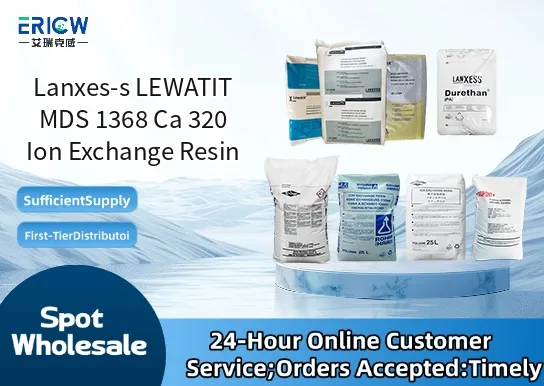
High-capacity calcium-selective chelating resin with optimized macroporous matrix for enhanced kinetics and fouling resistance.
Exceptional stability in acidic and oxidative environments, enabling robust performance in challenging process conditions.
Uniform spherical bead morphology ensures low pressure drop and consistent hydraulic flow distribution in fixed-bed systems.
Low soluble organic carbon (SOC) release, meeting stringent requirements for ultrapure water and pharmaceutical-grade applications.
Regenerable with standard acid solutions (e.g., HCl or H₂SO₄), supporting sustainable operation and reduced chemical consumption.
Removal of calcium and heavy metal ions from industrial process water and rinse streams.
Polishing step in ultrapure water (UPW) systems for semiconductor manufacturing.
Pre-treatment for reverse osmosis (RO) feedwater to prevent scaling and membrane fouling.
Recovery and purification of metal-bearing effluents in electroplating and metal finishing operations.
Calcium softening in high-purity boiler feedwater and steam generation systems.
| Chemical Type | Macroporous chelating resin with iminodiacetic acid functional groups |
| Product Form | Moist, spherical beads |
| Appearance | Light yellow to amber, uniform spherical particles |
| Primary Applications | Calcium and transition metal ion removal, selective softening, UPW polishing |
| Key Features | Ca²⁺ selectivity, acid/oxidant stability, low fines generation, regenerable |
| Ion Form | Calcium (Ca²⁺) form as supplied |
| Functional Group | Iminodiacetic acid (IDA) |
| Matrix Structure | Macroporous polystyrene-divinylbenzene copolymer |
Q1: What is the primary functional form and intended ionic state of LEWATIT MDS 1368 Ca 320?
A: LEWATIT MDS 1368 Ca 320 is supplied in the calcium (Ca²⁺) form, optimized for selective removal of multivalent cations such as heavy metals (e.g., Cu²⁺, Ni²⁺, Pb²⁺) and hardness ions from aqueous streams. Its macroporous polystyrene-divinylbenzene matrix provides enhanced kinetic performance and stability under variable pH or oxidizing conditions.
Q2: How does this resin differ from conventional gel-type cation exchangers in demanding applications?
A: Unlike gel-type resins, MDS 1368 Ca 320 features a macroporous structure that maintains consistent exchange capacity and flow characteristics across a broad pH range (approximately 0–14), even in the presence of suspended solids or organic fouling agents. This makes it particularly suitable for pretreatment of industrial wastewater, electroplating rinse water, or process streams with variable composition.
Q3: Can this resin be regenerated, and what are typical regeneration considerations?
A: Yes, LEWATIT MDS 1368 Ca 320 is fully regenerable using strong mineral acids (e.g., HCl or H₂SO₄) or high-concentration salt solutions. Regeneration efficiency depends on feedwater composition, loading history, and operational parameters—best practice includes monitoring breakthrough behavior and tailoring rinse steps to minimize residual regenerant carryover.
Q4: Is this resin suitable for food-grade or pharmaceutical water polishing applications?
A: While the base polymer meets general regulatory expectations for ion exchange resins used in water treatment, formal compliance with food-contact or pharmaceutical water standards (e.g., USP <1231>, EP 2.2.58) requires validation by the end user—including verification of extractables, rinse protocols, and system-specific qualification. Lanxes-s does not pre-certify this grade for direct food/pharma use without additional testing and documentation.
Contact With Us:
E-mail: wangxingqiang@ericwchem.com
Have a Questions? Call Us:
Add:
Building A1, Jiete Industrial Park, Huangpu District, Guangzhou City, Guangdong Province, China