English
 Español
 tiếng việt
 русский
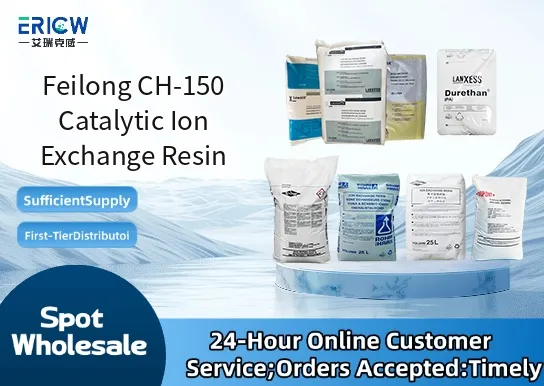
Highly selective catalytic functionality for esterification and transesterification reactions.
Sulfonic acid functional groups grafted onto a macroreticular polystyrene-divinylbenzene matrix ensure excellent thermal and mechanical stability.
Low swelling ratio in polar and non-polar solvents enables consistent performance across diverse reaction media.
Reusability over ≥50 reaction cycles with minimal activity loss under optimized regeneration protocols.
Low leaching of active sites (<0.02 mmol H⁺/g resin per cycle), ensuring product purity and catalyst longevity.
Biodiesel production via continuous-flow transesterification of vegetable oils and waste cooking oil.
Synthesis of high-value flavor and fragrance esters (e.g., isoamyl acetate, citronellyl acetate) under mild conditions.
Catalytic dehydration of alcohols to ethers in pharmaceutical intermediate manufacturing.
Acid-catalyzed condensation reactions in fine chemical synthesis, including acetal and ketal formation.
| Chemical Type | Sulfonated macroreticular strong acid cation exchange resin |
| Product Form | Moist, spherical beads (H⁺ form) |
| Appearance | Opaque amber to brown beads |
| Functional Group | –SO₃H (sulfonic acid) |
| Ion Exchange Capacity | ≥4.8 mmol H⁺/g (dry basis) |
| Moisture Content | 45–55% (as shipped) |
| Particle Size Range | 0.3–1.2 mm (≥95% retained on 16–60 mesh screens) |
| Maximum Operating Temperature | 120 °C (short-term); 100 °C (continuous) |
Q1: What is the primary catalytic function of Feilong CH-150 in industrial processes?
A: Feilong CH-150 is a functionalized strong-acid cation exchange resin designed to act as a heterogeneous catalyst—particularly effective in esterification, transesterification, and hydrolysis reactions—offering high selectivity, easy separation from reaction mixtures, and excellent reusability without leaching under typical process conditions.
Q2: How does CH-150 differ from conventional ion exchange resins used for water treatment?
A: Unlike standard water-purification resins optimized for ion removal, CH-150 features enhanced thermal and chemical stability, tailored surface functionality, and controlled crosslinking density to support catalytic performance—not just ion exchange—making it suitable for continuous-flow reactors and organic-phase reactions rather than aqueous softening applications.
Q3: Is CH-150 compatible with common solvents and feedstocks in fine chemical synthesis?
A: Yes, CH-150 demonstrates good compatibility with polar protic (e.g., methanol, ethanol), polar aprotic (e.g., THF, acetone), and many non-polar solvents (e.g., toluene, hexane), as well as common bio-based feedstocks such as fatty acids, glycerol, and short-chain alcohols—enabling broad applicability across biodiesel production and specialty ester synthesis.
Q4: What are the recommended regeneration and reuse protocols for maintaining catalytic activity?
A: Regeneration typically involves simple solvent washing (e.g., methanol or acetone) followed by mild acid rinse and drying under inert atmosphere or vacuum; activity retention over multiple cycles depends on operating temperature and feed purity, but consistent performance is generally observed for ≥10–20 batches under controlled conditions.
Contact With Us:
E-mail: wangxingqiang@ericwchem.com
Have a Questions? Call Us:
Add:
Building A1, Jiete Industrial Park, Huangpu District, Guangzhou City, Guangdong Province, China