English
 Español
 tiếng việt
 русский
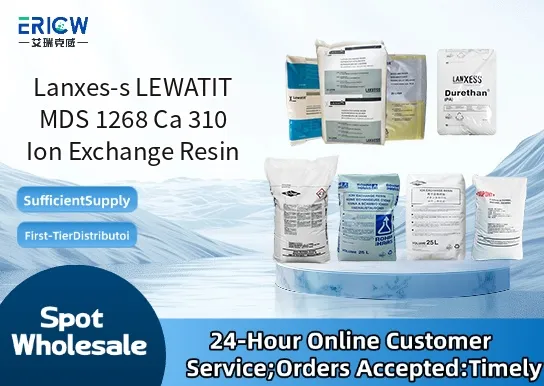
High-capacity, macroporous strong-acid cation exchange resin with calcium form (Ca²⁺) pre-loaded for immediate use in hardness removal.
Exceptional chemical and osmotic stability, enabling reliable performance in demanding industrial water treatment cycles.
Optimized bead uniformity and mechanical strength to minimize pressure drop and resist attrition during repeated service-regeneration cycles.
Low soluble organic carbon (SOC) release, supporting compliance with stringent regulatory requirements for potable water and pharmaceutical applications.
Tailored for high-efficiency softening of high-TDS and turbid feedwaters, including seawater pretreatment and brackish water conditioning.
Industrial boiler feedwater softening in power generation and steam systems.
Pretreatment for reverse osmosis (RO) and nanofiltration (NF) membrane systems.
Process water conditioning in food & beverage manufacturing and dairy processing.
Hardness control in closed-loop cooling water circuits and HVAC systems.
Regenerable softening in municipal and commercial decentralized water treatment units.
| Chemical Type | Strong-acid cation exchange resin (sulfonic acid functionalized polystyrene-divinylbenzene matrix) |
| Product Form | Calcium form (Ca²⁺), ready-to-use |
| Appearance | Spherical, uniform amber beads |
| Functional Group | –SO₃H (sulfonic acid) |
| Matrix Structure | Macroporous |
| Ion Exchange Capacity (min.) | 1.8 mmol/mL (wet volume, Ca²⁺ form) |
| Moisture Content (as shipped) | 46 – 50 % (w/w) |
| Particle Size Range | 0.4 – 0.9 mm (≥95% retained between 0.315 mm and 1.25 mm sieves) |
Q1: What is the primary functional form and intended use of LEWATIT MDS 1268 Ca 310?
A: LEWATIT MDS 1268 Ca 310 is a strongly acidic, macroporous cation exchange resin supplied in the calcium (Ca²⁺) form. It is specifically engineered for selective removal of multivalent cations—such as heavy metals, iron, and manganese—from process streams in industrial water treatment, pharmaceutical purification, and specialty chemical manufacturing.
Q2: How does the macroporous structure benefit performance compared to gel-type resins?
A: The macroporous matrix provides enhanced physical stability, superior resistance to fouling from organic or colloidal contaminants, and consistent ion exchange kinetics—even under variable pH, temperature, or feedwater quality conditions. This makes it especially suitable for challenging industrial effluents where gel-type resins may degrade or experience reduced capacity.
Q3: Can this resin be regenerated, and what are typical regeneration considerations?
A: Yes, LEWATIT MDS 1268 Ca 310 is fully regenerable using standard strong acid solutions (e.g., hydrochloric or sulfuric acid). Regeneration efficiency depends on operating conditions—including flow rate, bed depth, and contaminant loading—but generally achieves high recovery of exchange capacity with appropriate rinse protocols and controlled acid dosage.
Q4: Is this resin compatible with high-temperature or low-pH applications?
A: The macroporous polystyrene-divinylbenzene backbone offers good thermal stability up to approximately 120 °C and maintains structural integrity across a broad pH range (typically pH 0–14), making it suitable for demanding process environments including acidic metal recovery circuits and high-temperature polishing steps.
Q5: What precautions should be taken during storage and handling?
A: Store in original sealed packaging at ambient temperatures, away from direct sunlight and oxidizing agents. Avoid freezing, as ice formation may damage the bead structure. Prior to use, rinse thoroughly with deionized water to remove fines and ensure proper wetting. Always follow standard industrial hygiene practices when handling dry resin to minimize dust inhalation.
Contact With Us:
E-mail: wangxingqiang@ericwchem.com
Have a Questions? Call Us:
Add:
Building A1, Jiete Industrial Park, Huangpu District, Guangzhou City, Guangdong Province, China