English
 Español
 tiếng việt
 русский
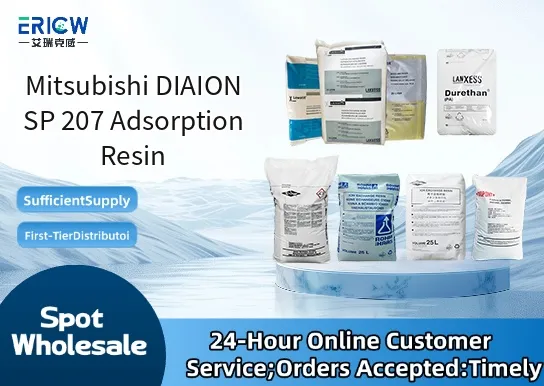
Macroporous styrene–divinylbenzene copolymer matrix with high surface area for efficient adsorption.
Hydrophobic surface chemistry optimized for selective removal of organic compounds from aqueous streams.
Excellent physical and chemical stability across wide pH range (pH 1–14) and in presence of oxidants.
Regenerable with common solvents (e.g., methanol, acetone, or dilute alkali), enabling sustainable process cycles.
Uniform spherical bead morphology ensures low pressure drop and consistent hydraulic performance in fixed-bed columns.
Removal of trace organic impurities from pharmaceutical process water and purified water systems.
Purification of natural product extracts (e.g., alkaloids, flavonoids) in herbal and nutraceutical manufacturing.
Decolorization and deodorization of food-grade syrups, fruit juices, and fermentation broths.
Recovery and concentration of valuable organic intermediates in fine chemical synthesis effluents.
Pre-treatment for reverse osmosis and ion exchange systems to protect downstream units from organic fouling.
| Chemical Type | Macroporous non-ionic adsorption resin |
| Product Form | Moist spherical beads |
| Appearance | Off-white to light yellow, free-flowing granules |
| Particle Size Range | 0.3–1.2 mm |
| Specific Surface Area | ~500–600 m²/g (BET method) |
| Mean Pore Diameter | ~15–20 nm |
| Water Content | ~45–55% (as shipped) |
| pH Stability Range | 1–14 (short-term exposure) |
Q1: What is the primary functional mechanism of DIAION SP 207 in purification processes?
A: DIAION SP 207 is a macroporous non-ionic adsorption resin based on styrene-divinylbenzene copolymer. Its high surface area and tailored pore structure enable selective physical adsorption of organic compounds—particularly medium-to-low polarity molecules—via hydrophobic interactions and van der Waals forces, without ion exchange or chemical reaction.
Q2: How does SP 207 compare to ion exchange resins in terms of regeneration and solvent compatibility?
A: Unlike ion exchange resins, SP 207 does not rely on ionic functionality and therefore remains stable and regenerable across a broad pH range (typically pH 1–14) and in both aqueous and organic solvent systems—including alcohols, acetone, ethyl acetate, and toluene—making it suitable for multi-step purification workflows involving diverse eluents.
Q3: Is SP 207 suitable for use in food-grade or pharmaceutical downstream processing?
A: Yes—SP 207 is manufactured under strict quality control and complies with global regulatory expectations for adsorbents used in food and pharmaceutical applications. It is commonly employed for impurity removal, decolorization, and residual solvent reduction in APIs, nutraceuticals, and natural product extracts, subject to customer-specific validation protocols.
Q4: What are typical operating conditions for column-based adsorption using SP 207?
A: SP 207 is typically operated in fixed-bed columns at ambient to moderately elevated temperatures (up to 60 °C) and flow rates adjusted to ensure adequate contact time—generally ranging from 0.1 to 5 bed volumes per hour, depending on feed composition and target removal efficiency. Breakthrough monitoring is recommended for process optimization.
Contact With Us:
E-mail: wangxingqiang@ericwchem.com
Have a Questions? Call Us:
Add:
Building A1, Jiete Industrial Park, Huangpu District, Guangzhou City, Guangdong Province, China