English
 Español
 tiếng việt
 русский
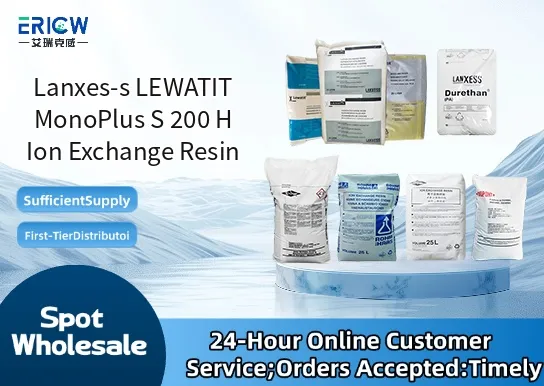
High-capacity strong acid cation exchange resin based on sulfonated polystyrene-divinylbenzene matrix.
Uniform spherical bead morphology ensures low pressure drop and excellent hydraulic performance in fixed-bed systems.
Optimized for high regeneration efficiency with sodium chloride, reducing brine consumption and operational costs.
Exceptional chemical and osmotic stability, suitable for repeated service-regeneration cycles in demanding industrial environments.
Complies with global food-grade and potable water standards including NSF/ANSI 61 and EU Regulation (EC) No. 1935/2004.
Softening of boiler feedwater and process water in power generation and industrial steam systems.
Pretreatment for reverse osmosis (RO) and electrodeionization (EDI) systems in pharmaceutical and semiconductor manufacturing.
Removal of hardness ions (Ca²⁺, Mg²⁺) from municipal drinking water and bottled water production lines.
Decationization in mixed-bed demineralization units for high-purity water generation.
Regenerable ion removal in closed-loop cooling water treatment and HVAC systems.
| Chemical Type | Strong Acid Cation (SAC), sulfonic acid functional group |
| Product Form | Moist, spherical beads |
| Appearance | Amber, translucent beads |
| Functional Group | –SO₃H |
| Matrix Structure | Crosslinked polystyrene-divinylbenzene (8% DVB) |
| Ion Form | H⁺ (hydrogen form) |
| Particle Size Range | 0.4 – 1.2 mm |
| Moisture Content | 47 – 53% (as shipped) |
Q1: What is the primary functional group and ionic form of LEWATIT MonoPlus S 200 H?
A: LEWATIT MonoPlus S 200 H is a strongly acidic cation exchange resin in the hydrogen (H⁺) form, featuring sulfonic acid functional groups grafted onto a highly crosslinked polystyrene-divinylbenzene matrix.
Q2: Is this resin suitable for deionization or polishing of ultrapure water in pharmaceutical or electronics applications?
A: Yes — LEWATIT MonoPlus S 200 H is widely used in high-purity water treatment systems, including mixed-bed configurations for final polishing, due to its high chemical stability, low extractables, and excellent regeneration efficiency with mineral acids.
Q3: How does the MonoPlus S 200 H differ from conventional gel-type strong acid cation resins?
A: The MonoPlus S 200 H features a uniform particle size distribution and macroporous morphology, offering improved hydraulic performance, higher resistance to fouling, faster kinetics, and more consistent bed packing compared to standard gel-type resins.
Q4: Can this resin be regenerated after exhaustion, and what are typical regeneration agents?
A: Yes — it is fully regenerable using dilute solutions of strong mineral acids such as hydrochloric or sulfuric acid. Regeneration efficiency and cycle life depend on feedwater quality, operating conditions, and proper rinsing protocols.
Contact With Us:
E-mail: wangxingqiang@ericwchem.com
Have a Questions? Call Us:
Add:
Building A1, Jiete Industrial Park, Huangpu District, Guangzhou City, Guangdong Province, China