English
 Español
 tiếng việt
 русский
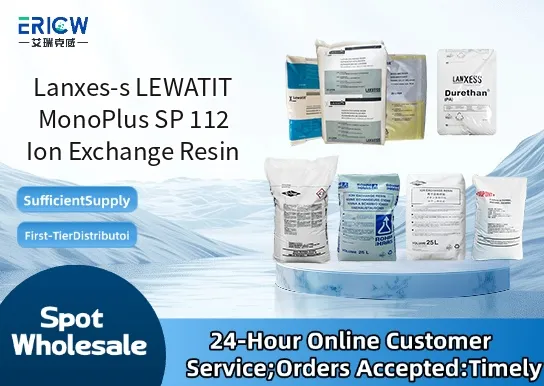
Highly selective sodium-form strong acid cation exchange resin based on sulfonated polystyrene-divinylbenzene matrix.
Optimized for high capacity and excellent kinetic performance in softening and demineralization applications.
Superior physical and chemical stability across wide pH (0–14) and temperature ranges (up to 120 °C).
Low fines generation and high mechanical strength ensure long service life and minimal pressure drop in fixed-bed systems.
Compliant with global food-grade and potable water standards including NSF/ANSI 61 and EU Regulation (EC) No. 1935/2004.
Industrial boiler feedwater softening and pretreatment in power generation plants.
Potable water treatment for municipal and residential drinking water systems.
Food and beverage processing, including sugar decolorization and syrup demineralization.
Pharmaceutical water purification (PW/WFI pre-treatment) in compliance with USP/EP requirements.
Electronics-grade ultrapure water (UPW) production for semiconductor manufacturing.
| Chemical Type | Strong Acid Cation (SAC), Sodium Form |
| Product Form | Moist, spherical beads |
| Appearance | Opaque, light yellow to amber beads |
| Primary Applications | Water softening, demineralization, and polishing |
| Functional Group | Sulfonic acid (–SO₃H) |
| Matrix Structure | Polystyrene crosslinked with divinylbenzene (DVB) |
| Uniformity Coefficient | ≤ 1.6 |
| Moisture Content | 47–52 % (w/w) |
Q1: What is the primary functional group and ionic form of LEWATIT MonoPlus SP 112?
A: LEWATIT MonoPlus SP 112 is a strongly acidic cation exchange resin based on a styrene-divinylbenzene matrix, functionalized with sulfonic acid groups. It is supplied in the sodium (Na⁺) form as standard, though it can be converted to hydrogen (H⁺), calcium (Ca²⁺), or other counterion forms depending on application requirements.
Q2: Is this resin suitable for potable water treatment applications?
A: Yes — LEWATIT MonoPlus SP 112 is widely used in drinking water softening and demineralization systems. Its high chemical stability, low extractables, and compliance with relevant global food-grade and drinking water regulations make it appropriate for such sensitive applications when installed and regenerated according to manufacturer guidelines.
Q3: How does SP 112 compare to conventional gel-type cation resins in terms of kinetic performance?
A: As a macroporous resin with uniform particle size and optimized pore structure, SP 112 offers faster ion exchange kinetics and improved resistance to fouling compared to many standard gel-type resins — particularly in feedwaters containing organic matter or suspended solids.
Q4: What regeneration chemicals are typically used, and how does regeneration efficiency compare to other strong acid cation resins?
A: Sodium chloride (NaCl) is most commonly used for regeneration in softening mode, while hydrochloric acid (HCl) is applied for hydrogen-form operation. Due to its high total capacity and favorable kinetics, SP 112 achieves efficient regeneration at standard dosages, often requiring less regenerant per unit volume than older-generation resins under comparable operating conditions.
Contact With Us:
E-mail: wangxingqiang@ericwchem.com
Have a Questions? Call Us:
Add:
Building A1, Jiete Industrial Park, Huangpu District, Guangzhou City, Guangdong Province, China