English
 Español
 tiếng việt
 русский
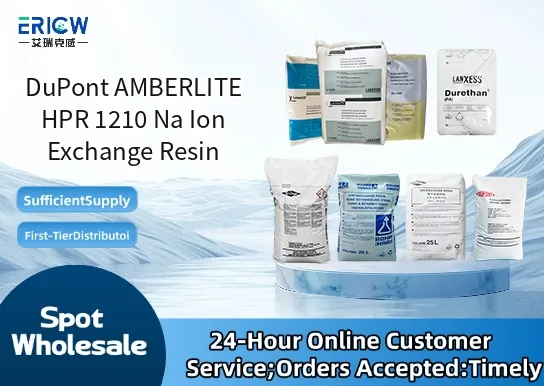
High-capacity, gel-type strong acid cation exchange resin in sodium form.
Optimized for high-efficiency softening with excellent kinetic performance and low pressure drop.
Superior physical and chemical stability across repeated regeneration cycles.
Uniform spherical bead morphology ensures consistent flow distribution and reduced channeling.
Complies with FDA 21 CFR §173.25 and NSF/ANSI Standard 61 for potable water applications.
Domestic and commercial water softening systems.
Pretreatment for reverse osmosis (RO) and deionization (DI) feed water.
Food and beverage processing where calcium and magnesium removal is critical.
Hospital and pharmaceutical facility utility water conditioning.
Laundry and textile industry boiler feedwater softening.
| Chemical Type | Polystyrene-divinylbenzene copolymer, sulfonated strong acid cation |
| Product Form | Sodium form (Na⁺) |
| Appearance | Uniform amber, spherical beads |
| Functional Group | Sulfonic acid (–SO₃H) |
| Ionic Capacity (min.) | ≥ 2.0 eq/L (dry basis) |
| Moisture Content | 45–50% (as shipped) |
| Particle Size Range | 0.4–1.2 mm |
| Uniformity Coefficient (max.) | 1.7 |
Q1: What is the primary functional form of AMBERLITE HPR 1210 resin?
A: AMBERLITE HPR 1210 is supplied in the sodium (Na⁺) form and is specifically designed for softening applications where calcium and magnesium ions are exchanged for sodium ions in aqueous streams.
Q2: Is this resin suitable for potable water treatment?
A: Yes — AMBERLITE HPR 1210 Na is commonly used in municipal and residential drinking water softening systems. It meets relevant regulatory requirements for indirect food contact and is widely accepted for use in systems supplying potable water, subject to local approval and proper system validation.
Q3: How does HPR 1210 differ from standard gel-type cation resins?
A: HPR 1210 features a macroporous polystyrene matrix with high physical stability and enhanced resistance to osmotic shock and fouling. Its uniform bead structure and optimized crosslinking support consistent performance under variable flow rates and feedwater conditions, especially in demanding industrial softening duties.
Q4: What regeneration chemicals are recommended for this resin?
A: Sodium chloride (NaCl) brine is the standard regenerant. The resin is fully regenerable using saturated or near-saturated brine solutions, and typical regeneration efficiency is maintained across multiple cycles when operated within design parameters and properly rinsed post-regeneration.
Q5: Can AMBERLITE HPR 1210 be used in high-temperature applications?
A: This resin is rated for continuous service up to 120 °C (248 °F), making it suitable for hot process water softening and certain steam generation pre-treatment applications. However, prolonged exposure above 100 °C may accelerate aging, so thermal management and monitoring are advised in elevated-temperature service.
Contact With Us:
E-mail: wangxingqiang@ericwchem.com
Have a Questions? Call Us:
Add:
Building A1, Jiete Industrial Park, Huangpu District, Guangzhou City, Guangdong Province, China