English
 Español
 tiếng việt
 русский
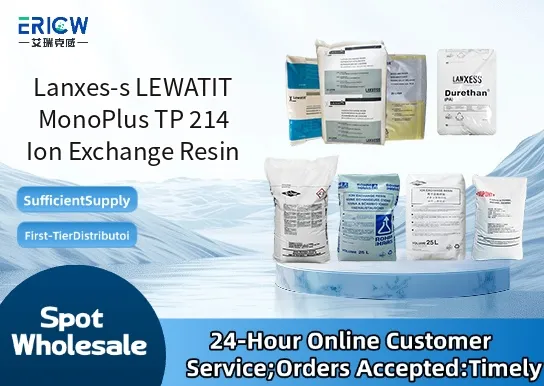
Highly uniform spherical beads ensuring consistent hydraulic performance and low pressure drop.
Superior chemical stability in strong acid and alkaline environments, suitable for demanding regeneration cycles.
Optimized kinetic performance for rapid ion exchange kinetics, especially for divalent cations like Ca²⁺ and Mg²⁺.
Low osmotic swelling behavior, enhancing mechanical durability and long-term operational reliability.
Manufactured under strict GMP-compliant processes, meeting stringent quality control standards for pharmaceutical and food-grade applications.
Ultrapure water production for semiconductor manufacturing and microelectronics rinsing.
Pretreatment of feedwater in high-pressure boiler systems to prevent scaling and corrosion.
Removal of heavy metals (e.g., Cu²⁺, Ni²⁺, Pb²⁺) from industrial wastewater streams.
Pharmaceutical process water polishing compliant with USP <845> and EP 2.2.48 requirements.
Sugar decolorization and demineralization in food & beverage processing.
| Chemical Type | Strong Acid Cation Exchange Resin (Sulfonated polystyrene-divinylbenzene) |
| Product Form | Moist, spherical beads |
| Appearance | Opaque amber to light brown beads |
| Functional Group | Sulfonic acid (–SO₃H) |
| Ion Form | H⁺ form (ready-to-use) |
| Particle Size Range | 0.315 – 1.25 mm |
| Uniformity Coefficient | ≤ 1.6 |
| Moisture Content | 47 – 53% (w/w) |
Q1: What is the primary functional group and ionic form of LEWATIT MonoPlus TP 214?
A: LEWATIT MonoPlus TP 214 is a strongly acidic cation exchange resin based on a styrene-divinylbenzene matrix, functionalized with sulfonic acid groups. It is supplied in the sodium (Na⁺) form, making it suitable for softening and selective cation removal applications.
Q2: Is this resin suitable for use in pharmaceutical or food-grade water treatment systems?
A: Yes — LEWATIT MonoPlus TP 214 is designed for high-purity applications and complies with global regulatory expectations for ion exchange resins used in pharmaceutical water systems (e.g., WFI and PW) and food-contact water processing, subject to proper validation and regeneration protocols.
Q3: How does TP 214 differ from conventional gel-type strong acid cation resins?
A: TP 214 features a uniform particle size distribution and highly spherical beads, which improve hydraulic performance, reduce pressure drop, and enhance regeneration efficiency compared to standard gel-type resins. Its optimized crosslinking also supports consistent kinetics and mechanical stability under repeated cycling.
Q4: What are the recommended storage conditions for long-term stability?
A: Store in original sealed packaging at temperatures between 5 °C and 40 °C, away from direct sunlight and oxidizing agents. Avoid freezing, as ice formation may damage bead integrity. Once opened, keep moist and use within a reasonable timeframe to prevent microbial growth or dehydration.
Contact With Us:
E-mail: wangxingqiang@ericwchem.com
Have a Questions? Call Us:
Add:
Building A1, Jiete Industrial Park, Huangpu District, Guangzhou City, Guangdong Province, China