English
 Español
 tiếng việt
 русский
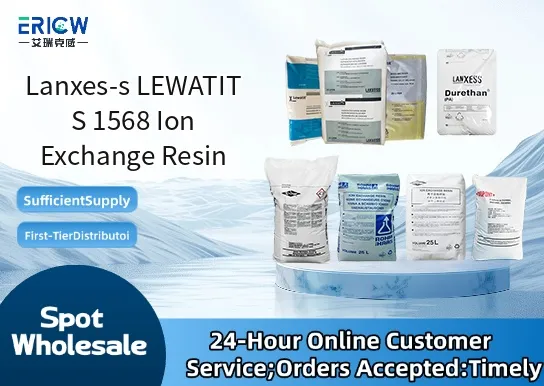
Highly stable macroporous polystyrene-divinylbenzene matrix for consistent performance under varying pH and temperature conditions.
Optimized for selective removal of heavy metal cations, including Cu²⁺, Ni²⁺, Zn²⁺, and Cd²⁺, even from low-concentration streams.
Excellent physical and chemical durability with low attrition rate, ensuring long service life in continuous or batch operation modes.
Fast kinetics and high exchange capacity due to uniform bead size distribution (0.3–1.2 mm) and well-developed pore structure.
Regenerable with standard acid solutions (e.g., HCl or H₂SO₄), enabling cost-effective reuse and minimal waste generation.
Heavy metal recovery and wastewater polishing in electroplating and metal finishing industries.
Pre-treatment and purification of process water in semiconductor manufacturing facilities.
Removal of trace metal contaminants from pharmaceutical-grade purified water systems.
Effluent treatment in mining and hydrometallurgical operations for environmental compliance.
Decentralized water reclamation units requiring robust, low-maintenance ion exchange media.
| Chemical Type | Macroporous chelating resin with iminodiacetic acid functional groups |
| Product Form | Moist, spherical beads |
| Appearance | Beige to light brown, uniform granules |
| Primary Applications | Selective heavy metal removal and recovery from aqueous solutions |
| Key Features | High selectivity for transition metals, acid stability, regenerability |
| Benefits | Reduced chemical consumption, extended cycle life, compliance with stringent discharge limits |
| Storage Conditions | Store in original packaging at 5–40 °C; avoid freezing and direct sunlight |
| Particle Size Range | 0.3–1.2 mm (95% retained on 0.3 mm sieve) |
Q1: What is the primary functional group and ionic form of LEWATIT S 1568?
A: LEWATIT S 1568 is a strongly acidic cation exchange resin based on a styrene-divinylbenzene matrix, functionalized with sulfonic acid groups. It is supplied in the sodium (Na⁺) form, making it suitable for softening and selective cation removal applications.
Q2: Can LEWATIT S 1568 be used in food-grade or pharmaceutical water treatment systems?
A: Yes — LEWATIT S 1568 is manufactured and tested to meet relevant global requirements for use in potable water and process water systems serving food, beverage, and pharmaceutical industries. Its compliance is verified through extractables testing and adherence to applicable regulatory frameworks for ion exchange resins intended for indirect contact with consumables.
Q3: How does LEWATIT S 1568 differ from standard gel-type strong acid cation resins in terms of physical structure and performance?
A: LEWATIT S 1568 features a macroporous structure, offering enhanced mechanical stability, superior resistance to oxidation and osmotic shock, and consistent performance across varying pH and temperature conditions — especially beneficial in demanding industrial water treatment where feedwater quality fluctuates.
Q4: What regeneration chemicals and typical operating conditions are recommended for optimal service life?
A: Regeneration is commonly performed using sodium chloride (NaCl) brine. The resin exhibits good regenerability under standard fixed-bed conditions, with typical service flow rates and bed depths aligned with conventional softening system design practices. For longest service life, maintaining proper pre-filtration and avoiding excessive suspended solids or oxidants in the influent is essential.
Contact With Us:
E-mail: wangxingqiang@ericwchem.com
Have a Questions? Call Us:
Add:
Building A1, Jiete Industrial Park, Huangpu District, Guangzhou City, Guangdong Province, China