English
 Español
 tiếng việt
 русский
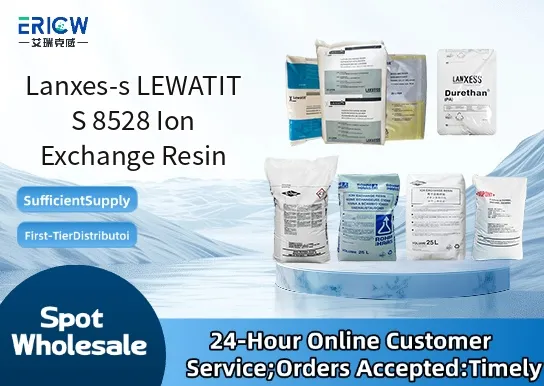
Highly selective for divalent cations such as Ca²⁺ and Mg²⁺, enabling superior hardness removal efficiency.
Optimized macroporous polystyrene matrix ensures excellent physical stability and resistance to osmotic shock during regeneration cycles.
Low operating pressure drop and high flow capacity support efficient large-scale water softening and demineralization systems.
Consistent bead uniformity and narrow particle size distribution enhance hydraulic performance and bed homogeneity.
Compatible with standard sodium chloride regeneration protocols, minimizing operational complexity and chemical consumption.
Industrial boiler feedwater pretreatment for high-pressure steam generation.
Precise hardness control in pharmaceutical-grade purified water (PW) and water-for-injection (WFI) production systems.
Removal of heavy metal cations (e.g., Cu²⁺, Ni²⁺, Zn²⁺) from process effluents in electroplating and metal finishing plants.
Softening of municipal and industrial raw water prior to reverse osmosis (RO) membrane systems.
Cation exchange polishing step in ultrapure water (UPW) facilities for semiconductor manufacturing.
| Chemical Type | Strong acid cation exchanger, sulfonated polystyrene-divinylbenzene copolymer |
| Product Form | Na⁺ form (ready-to-use) |
| Appearance | Spherical, amber-colored beads |
| Primary Applications | Hardness removal, demineralization, heavy metal recovery, UPW polishing |
| Functional Group | Sulfonic acid (–SO₃H) |
| Ion Exchange Capacity (min.) | 1.9 eq/L (Na⁺ form) |
| Moisture Content | 47–53 % (w/w) |
| Particle Size Range | 0.4–1.2 mm (≥95% retained on 0.315 mm sieve) |
Q1: What is the primary functional group and ionic form of LEWATIT S 8528?
A: LEWATIT S 8528 is a strongly acidic cation exchange resin based on a styrene-divinylbenzene matrix, functionalized with sulfonic acid groups. It is supplied in the sodium (Na⁺) form, making it suitable for softening and selective cation removal applications.
Q2: Is LEWATIT S 8528 suitable for use in potable water treatment systems?
A: Yes — LEWATIT S 8528 is designed for use in drinking water applications and complies with relevant global regulatory frameworks for ion exchange resins intended for contact with potable water, provided it is properly rinsed and regenerated according to manufacturer guidelines prior to service.
Q3: How does LEWATIT S 8528 differ from standard gel-type cation resins in terms of physical structure and performance?
A: LEWATIT S 8528 features a macroporous structure, offering enhanced mechanical stability, superior resistance to osmotic shock, and improved kinetics for treating solutions with high suspended solids or organic fouling potential — unlike conventional gel-type resins that rely solely on diffusion through a swollen polymer network.
Q4: What regeneration chemicals are recommended for LEWATIT S 8528 in softening service?
A: Sodium chloride (NaCl) brine is the standard regenerant for softening applications. For specialized demineralization or trace metal removal, hydrochloric acid (HCl) or sulfuric acid (H₂SO₄) may be used depending on the target ions and system design — always following resin compatibility and operational safety protocols.
Contact With Us:
E-mail: wangxingqiang@ericwchem.com
Have a Questions? Call Us:
Add:
Building A1, Jiete Industrial Park, Huangpu District, Guangzhou City, Guangdong Province, China