English
 Español
 tiếng việt
 русский
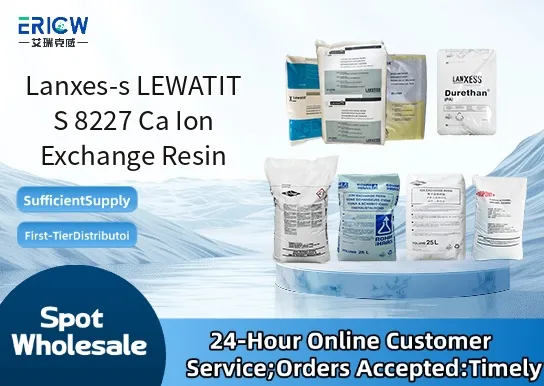
Highly selective calcium (Ca²⁺) exchange capacity for targeted hardness removal.
Stable polystyrene-divinylbenzene matrix with excellent chemical and osmotic stability.
Optimized spherical bead morphology ensuring low pressure drop and uniform flow distribution.
Low soluble organic carbon (SOC) release, supporting high-purity water requirements.
Regenerable with standard sodium chloride (NaCl) brine, enabling cost-effective cyclic operation.
Drinking water softening in municipal and point-of-entry treatment systems.
Pretreatment for reverse osmosis (RO) and nanofiltration (NF) membrane protection.
Industrial boiler feedwater conditioning to prevent scale formation.
Food & beverage process water polishing where calcium control is critical.
Pharmaceutical-grade purified water (PW) systems compliant with USP/EP standards.
| Chemical Type | Strong acid cation (SAC) exchange resin, sulfonated polystyrene-DVB |
| Product Form | Moist, spherical beads |
| Appearance | Opaque amber to brown beads |
| Functional Group | Sulfonic acid (–SO₃H) |
| Ion Form | Calcium (Ca²⁺) form |
| Moisture Content | 45–50 % (w/w) |
| Particle Size Range | 0.315–1.25 mm |
| Uniformity Coefficient | ≤ 1.6 |
Q1: What is the primary functional form of LEWATIT S 8227 resin?
A: LEWATIT S 8227 is supplied in the calcium (Ca²⁺) form, making it specifically suited for applications requiring selective divalent cation exchange, such as water softening, heavy metal removal, or calcium-specific conditioning in process streams.
Q2: How does LEWATIT S 8227 differ from standard sodium-form cation resins?
A: Unlike sodium-form resins that release Na⁺ during ion exchange, S 8227 releases Ca²⁺ ions—offering enhanced selectivity for anions like sulfate or carbonate in downstream processes, and reducing sodium-related interference in sensitive applications such as food-grade water treatment or pharmaceutical purification.
Q3: Can LEWATIT S 8227 be regenerated, and what regeneration agents are recommended?
A: Yes, it is fully regenerable using calcium chloride (CaCl₂) solutions. Regeneration efficiency depends on flow rate, concentration, and bed volume; typical practice involves moderate-strength CaCl₂ dosing followed by thorough rinsing to restore exchange capacity and minimize residual chloride.
Q4: Is this resin suitable for use in potable water systems?
A: LEWATIT S 8227 is designed for industrial and municipal water treatment applications, including those serving drinking water preparation—provided it is operated and maintained in accordance with local regulatory requirements for materials in contact with potable water.
Contact With Us:
E-mail: wangxingqiang@ericwchem.com
Have a Questions? Call Us:
Add:
Building A1, Jiete Industrial Park, Huangpu District, Guangzhou City, Guangdong Province, China