English
 Español
 tiếng việt
 русский
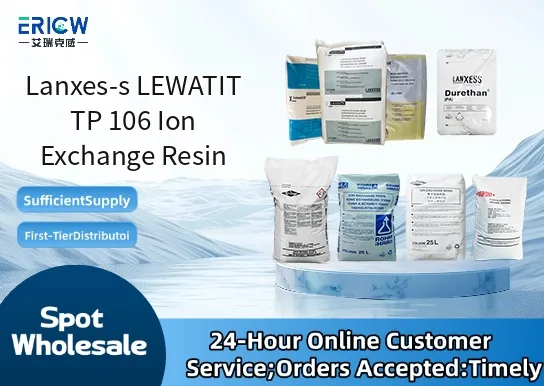
Highly selective for heavy metal ions including Cu²⁺, Ni²⁺, Zn²⁺, and Cd²⁺ in acidic to neutral pH ranges.
Exceptional chemical and physical stability in aggressive industrial effluents containing oxidants and moderate organic loadings.
Optimized macroporous polyacrylic matrix providing rapid kinetics and low pressure drop during service cycles.
Regenerable with dilute acid solutions (e.g., 2–5% H₂SO₄ or HCl), enabling sustainable closed-loop operation.
Low soluble organic leaching and minimal fines generation, ensuring long-term column integrity and effluent compliance.
Removal of toxic heavy metals from electroplating rinse waters and metal finishing wastewater.
Treatment of mining leachates and acid mine drainage prior to discharge or resource recovery.
Polishing step in hydrometallurgical processes for high-purity nickel, cobalt, and copper electrolyte streams.
Pre-treatment of process water in semiconductor manufacturing to meet ultra-low metal specifications.
Decentralized on-site treatment systems for small-to-medium industrial facilities with variable flow and composition.
| Chemical Type | Macroporous polyacrylic chelating resin with iminodiacetic functional groups |
| Product Form | Moist, spherical beads |
| Appearance | Opaque beige to light brown beads |
| Functional Group | Iminodiacetic acid (IDA) |
| Ion Form | Na⁺ form (standard supply) |
| Particle Size Range | 0.4 – 1.2 mm |
| Moisture Content | ~48 – 52% (w/w) |
| Temperature Limit | Max. 60 °C continuous operation |
Q1: What is the primary functional group and ionic form of LANXESS LEWATIT TP 106?
A: LEWATIT TP 106 is a strongly acidic cation exchange resin based on a sulfonated polystyrene-divinylbenzene matrix, supplied in the sodium (Na⁺) form. It is designed for selective removal of multivalent cations such as calcium, magnesium, heavy metals, and other positively charged species from aqueous solutions.
Q2: Is LEWATIT TP 106 suitable for food or pharmaceutical applications?
A: LEWATIT TP 106 is manufactured to meet high-purity standards and is commonly used in demineralization and purification processes for process water in food, beverage, and pharmaceutical manufacturing. However, final suitability depends on compliance with site-specific regulatory requirements and validation protocols — users must confirm compatibility with applicable GMP, USP, or local health authority guidelines.
Q3: How does LEWATIT TP 106 differ from standard gel-type cation resins in terms of physical structure and performance?
A: Unlike conventional gel-type resins, LEWATIT TP 106 features a macroporous structure that provides enhanced mechanical stability, superior resistance to fouling by organic matter or suspended solids, and consistent performance across varying pH and temperature conditions — making it especially effective in challenging feedwaters with variable quality.
Q4: What regeneration protocol is recommended for LEWATIT TP 106?
A: Regeneration is typically performed using sodium chloride (NaCl) solution. Optimal regenerant concentration, flow rate, and contact time depend on service cycle conditions and contaminant load; however, standard practice involves 5–10% NaCl at controlled flow rates to ensure efficient ion exchange capacity recovery while minimizing rinse volume.
Contact With Us:
E-mail: wangxingqiang@ericwchem.com
Have a Questions? Call Us:
Add:
Building A1, Jiete Industrial Park, Huangpu District, Guangzhou City, Guangdong Province, China