English
 Español
 tiếng việt
 русский
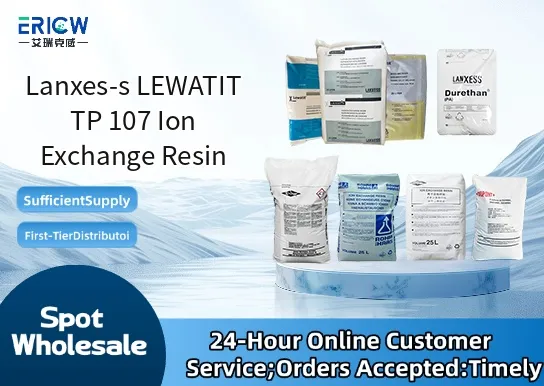
Highly selective for heavy metal ions including lead, cadmium, and nickel in low-concentration aqueous streams.
Stable polyacrylate matrix offering excellent resistance to oxidation and mechanical attrition during cyclic operation.
Fast kinetic performance with rapid uptake even at low flow rates and ambient temperatures.
Low soluble organic content (SOC), minimizing post-treatment contamination in sensitive applications.
Regenerable with dilute acid solutions, enabling cost-effective reuse over multiple service cycles.
Removal of toxic heavy metals from industrial wastewater in electroplating and metal finishing plants.
Treatment of mining effluents to meet stringent discharge limits for copper, zinc, and cobalt.
Polishing step in semiconductor ultrapure water (UPW) systems for trace metal control.
Decentralized treatment of landfill leachate prior to biological or membrane processes.
Recovery of valuable metals (e.g., nickel, cobalt) from process rinse waters in battery manufacturing.
| Chemical Type | Polyacrylic chelating resin with iminodiacetic functional groups |
| Product Form | Moist, spherical beads |
| Appearance | Light amber to brown, uniform spherical particles |
| Functional Group | Iminodiacetic acid (IDA) |
| Ion Form | Sodium form (Na⁺) as supplied |
| Particle Size Range | 0.3–1.2 mm |
| Moisture Content | 45–55% (w/w) |
| Temperature Limit | Max. 80 °C continuous operation |
Q1: What is the primary functional group and ionic form of LANXESS LEWATIT TP 107?
A: LEWATIT TP 107 is a strongly acidic cation exchange resin based on a styrene-divinylbenzene matrix, functionalized with sulfonic acid groups. It is supplied in the sodium (Na⁺) form, making it suitable for softening and selective metal ion removal applications.
Q2: In which industrial processes is LEWATIT TP 107 most commonly applied?
A: This resin is widely used in water softening for boiler feed and process water, recovery of valuable metals from rinse streams in electroplating, and pretreatment of feedwater in high-purity systems. Its high chemical stability and selectivity for divalent cations make it especially effective in challenging industrial effluents.
Q3: How does LEWATIT TP 107 compare to gel-type resins in terms of physical structure and performance?
A: Unlike conventional gel-type resins, LEWATIT TP 107 features a macroporous structure, providing superior mechanical strength, resistance to osmotic shock, and consistent performance across variable pH and temperature conditions. This enhances its durability in cyclic operation and reduces fragmentation risk during regeneration.
Q4: Can LEWATIT TP 107 be regenerated, and what are typical regeneration requirements?
A: Yes, LEWATIT TP 107 is fully regenerable using common regenerants such as sodium chloride (NaCl) for softening or mineral acids like HCl or H₂SO₄ for full hydrogen-form conversion. Regeneration efficiency depends on flow rate, concentration, and bed volume — best practices recommend controlled, uniform contact to maintain capacity and longevity.
Contact With Us:
E-mail: wangxingqiang@ericwchem.com
Have a Questions? Call Us:
Add:
Building A1, Jiete Industrial Park, Huangpu District, Guangzhou City, Guangdong Province, China