English
 Español
 tiếng việt
 русский
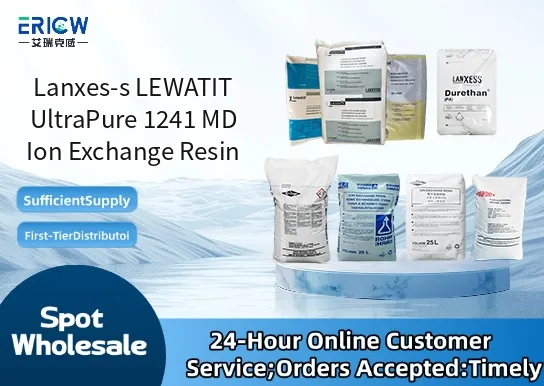
Highly purified, low-extractable matrix specifically engineered for ultra-high-purity water production in pharmaceutical and biotech applications.
Ultra-low total organic carbon (TOC) release, meeting stringent USP <841> and EP 2.2.43 requirements for purified water systems.
Optimized spherical morphology and narrow particle size distribution (0.45–0.65 mm) for uniform bed hydraulics and minimal pressure drop.
Exceptional chemical stability in repeated regeneration cycles with NaOH and HCl, ensuring long service life under strict GMP conditions.
Pre-packed and pre-conditioned in certified cleanrooms (ISO Class 7), supplied in sterile, endotoxin-tested, double-bagged containers.
Final polishing step in pharmaceutical-grade purified water (PW) and water-for-injection (WFI) generation systems.
Ultrapure water production for biologics manufacturing, including monoclonal antibody and vaccine processing.
Critical pretreatment and polishing in semiconductor ultrapure water (UPW) loops requiring sub-ppt ionic contamination control.
Regulatory-compliant deionization in clinical diagnostics reagent water systems and analytical laboratory pure water units.
| Chemical Type | Strong acid cation exchange resin (sulfonated polystyrene-divinylbenzene) |
| Product Form | Moist, hydrogen-form, pre-conditioned beads |
| Appearance | Uniform amber spherical beads |
| Particle Size Range | 0.45–0.65 mm |
| Moisture Content | 47–53% (as shipped) |
| Exchange Capacity (H⁺ form) | ≥ 1.9 eq/L (dry base) |
| Maximum Operating Temperature | 105 °C |
| Primary Applications | Pharmaceutical PW/WFI polishing, biotech process water, UPW final ion removal |
Q1: What is the primary application of LEWATIT UltraPure 1241 MD in pharmaceutical and biotech processes?
A: LEWATIT UltraPure 1241 MD is specifically designed for final polishing steps in ultra-pure water (UPW) generation systems used in pharmaceutical manufacturing, bioprocessing, and analytical laboratories—where removal of trace ionic contaminants, including low-molecular-weight organic acids and residual counter-ions, is critical to meet stringent water quality specifications.
Q2: How does LEWATIT UltraPure 1241 MD differ from standard strong base anion exchange resins?
A: Unlike conventional Type I or Type II strong base anion resins, UltraPure 1241 MD features a highly cross-linked macroporous matrix with ultra-low extractables and a specially engineered quaternary ammonium functional group optimized for superior silica and borate removal at low conductivity, minimal leaching of organic amines, and enhanced stability under repeated regeneration cycles in high-purity service.
Q3: Is this resin suitable for use in single-use or disposable water purification systems?
A: Yes—LEWATIT UltraPure 1241 MD is widely selected for pre-packed, sterile-grade cartridges and modular polishing units due to its consistent batch-to-batch performance, low particulate release, and compatibility with gamma irradiation and steam sterilization protocols commonly employed in single-use bioprocess infrastructure.
Q4: What regeneration protocol is recommended for optimal long-term performance?
A: Regeneration is typically performed using sodium hydroxide solution under controlled flow and concentration conditions; the exact regimen—including NaOH concentration, contact time, and rinse volume—should be validated per system design and feedwater quality, with emphasis on minimizing residual alkali and ensuring full functional group recovery before return to service.
Contact With Us:
E-mail: wangxingqiang@ericwchem.com
Have a Questions? Call Us:
Add:
Building A1, Jiete Industrial Park, Huangpu District, Guangzhou City, Guangdong Province, China