English
 Español
 tiếng việt
 русский
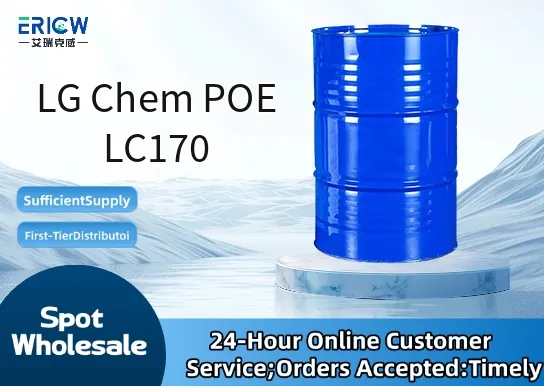
Outstanding long-term heat resistance for extended service life in high-temperature environments.
Excellent melt flow stability enabling consistent processing across extrusion and injection molding operations.
Superior compatibility with polyolefin-based polymers, facilitating seamless blending without phase separation.
Low dielectric constant and dissipation factor, making it ideal for electrical insulation applications.
Enhanced UV and weathering resistance due to inherent molecular stability and optional stabilizer package integration.
Photovoltaic module encapsulation films for solar panels.
Automotive under-hood components requiring thermal and chemical resilience.
Wire and cable jacketing for low-smoke, halogen-free insulation systems.
Toughened polypropylene (PP) compounds for structural interior and exterior automotive parts.
Flexible packaging layers demanding seal integrity and moisture barrier performance.
| Chemical Type | Polyolefin Elastomer (POE), ethylene-octene copolymer |
| Product Form | Pellets |
| Appearance | Off-white, free-flowing cylindrical pellets |
| Primary Applications | Encapsulation, polymer modification, flexible insulation |
| Key Features | High elasticity, low compression set, excellent processability |
| Benefits | Improved impact strength at low temperatures, reduced part warpage, enhanced recyclability |
| Processing Method | Extrusion, injection molding, blow molding |
| Standard Packaging | 25 kg multi-layer paper/polyethylene valve bags |
Q1: What is LG Chem POE LC170 primarily used for?
A: LG Chem POE LC170 is a polyolefin elastomer designed as a functional impact modifier and toughness enhancer in polypropylene (PP) and polyethylene (PE)-based compounds, particularly in automotive interior parts, packaging films, and flexible molded components requiring improved low-temperature impact resistance and melt processability.
Q2: How does LC170 differ from conventional EPDM or EPR impact modifiers?
A: Unlike traditional diene-based elastomers, LC170 is an ethylene-octene copolymer with a uniform short-chain branching distribution and narrow molecular weight distribution. This results in superior dispersion in polyolefin matrices, enhanced compatibility without compatibilizers in many cases, and more consistent mechanical performance—especially in thin-gauge applications where phase separation is critical.
Q3: Is LC170 suitable for food-contact or medical-grade formulations?
A: LC170 is manufactured under strict quality control and is commonly selected for applications requiring compliance with general food-contact regulations, such as FDA 21 CFR §177.1520 for olefin polymers. However, final regulatory approval depends on the complete formulation, processing conditions, and end-use requirements—users must conduct their own suitability assessment and obtain appropriate certifications.
Q4: What are typical processing recommendations for LC170?
A: LC170 processes readily using standard polyolefin equipment—extruders, injection molders, and blow molders—without requiring major reconfiguration. It exhibits good thermal stability up to typical PP/PE processing temperatures and generally requires no pre-drying. Optimal melt temperature ranges align with the host resin, and residence time should be minimized to preserve long-chain branching integrity.
Q5: How should LC170 be stored and handled to maintain performance?
A: Store LC170 in its original sealed packaging in a cool, dry, well-ventilated area away from direct sunlight and sources of heat or ignition. Avoid prolonged exposure to high humidity or extreme temperatures. For best results, use within 12 months of receipt and follow standard industrial handling practices for thermoplastic elastomers.
Contact With Us:
E-mail: wangxingqiang@ericwchem.com
Have a Questions? Call Us:
Add:
Building A1, Jiete Industrial Park, Huangpu District, Guangzhou City, Guangdong Province, China