English
 Español
 tiếng việt
 русский
Excellent soft-touch feel with balanced elasticity and recovery.
Good processability via injection molding and extrusion at standard TPE processing temperatures.
Enhanced resistance to UV exposure and thermal aging compared to conventional SEBS-based TPEs.
Low extractables profile, suitable for applications requiring regulatory compliance support.
Compatible with polypropylene (PP) and polyethylene (PE) substrates for overmolding.
Soft-grip handles for power tools and garden equipment.
Sealing rings and gaskets in automotive fluid systems.
Consumer electronics housings and protective casings.
Medical device components requiring tactile feedback and chemical resistance.
Household appliance grips and control knobs.
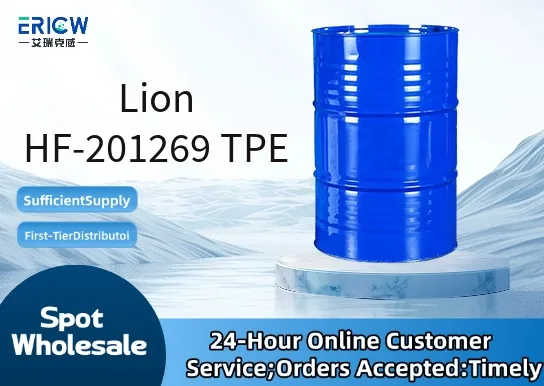
| Chemical Type | Styrenic Block Copolymer (SEBS)-based Thermoplastic Elastomer |
| Product Form | Pellets |
| Appearance | Off-white, uniform cylindrical pellets |
| Hardness (Shore A) | 65 ± 3 |
| Melt Flow Rate (230°C/2.16 kg) | 18–22 g/10 min |
| Density | 0.92–0.94 g/cm³ |
| Key Features | Soft-touch surface, PP/PE adhesion, UV-stabilized |
| Benefits | Reduced cycle time, no vulcanization required, recyclable thermoplastic |
Q1: What is the primary functional role of Lion HF-201269 TPE in thermoplastic elastomer formulations?
A: Lion HF-201269 TPE is a high-performance processing aid and compatibilizer designed to enhance melt flow, reduce viscosity, and improve interfacial adhesion between dissimilar polymer phases—particularly in SEBS-, TPU-, or PP-based TPE blends.
Q2: Is Lion HF-201269 TPE suitable for applications requiring regulatory compliance with food contact or medical device standards?
A: While Lion HF-201269 TPE is formulated using FDA-acknowledged monomers and exhibits low extractables, it is not pre-certified for food contact or medical use. End-use compliance must be verified by the compounder through full system testing and regulatory assessment per applicable jurisdictional requirements.
Q3: How should Lion HF-201269 TPE be incorporated into standard TPE compounding processes?
A: It is typically added during the masterbatch stage or final extrusion step using conventional twin-screw extruders. Good dispersion is achieved at standard processing temperatures (160–220 °C) and moderate shear; pre-drying is not required under typical ambient storage conditions.
Q4: Does Lion HF-201269 TPE affect the mechanical properties of the final TPE compound?
A: When used within recommended dosage ranges, it generally maintains or slightly improves tensile strength and elongation at break while significantly enhancing processability. Over-addition may reduce hardness and modulus, so optimization is advised for each specific formulation.
Contact With Us:
E-mail: wangxingqiang@ericwchem.com
Have a Questions? Call Us:
Add:
Building A1, Jiete Industrial Park, Huangpu District, Guangzhou City, Guangdong Province, China