English
 Español
 tiếng việt
 русский
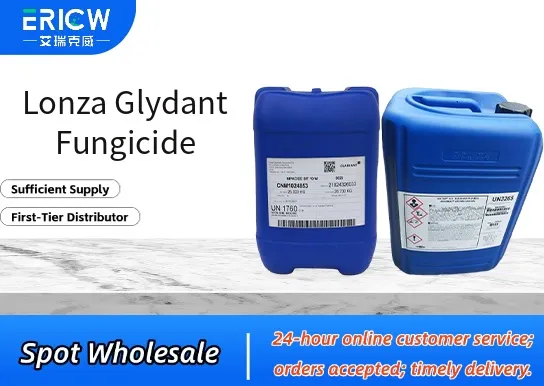
Broad-spectrum efficacy against common fungi, yeasts, and bacteria in water-based industrial formulations.
Low-toxicity profile with favorable environmental and occupational safety characteristics.
Excellent compatibility with anionic, nonionic, and amphoteric surfactants and common formulation ingredients.
Stable across a wide pH range (pH 4–10), ensuring consistent performance in diverse product matrices.
Non-volatile and non-sensitizing, supporting regulatory compliance for industrial and institutional applications.
Preservation of water-based paints and coatings during storage and in-can.
Microbial control in metalworking fluids and cutting oils.
Protection of adhesives, sealants, and caulks against spoilage.
Stabilization of construction chemicals including grouts, mortars, and tile adhesives.
Preservation of cleaning and sanitizing concentrates used in institutional and industrial settings.
| Chemical Type | Glyoxal-based biocide (active ingredient: 1,2-bis(5-methyl-2-furyl)ethane-1,2-dione derivative) |
| Product Form | Liquid concentrate |
| Appearance | Clear to slightly hazy, pale yellow liquid |
| Primary Applications | In-can preservative for water-based industrial formulations |
| Key Features | Non-oxidizing, low VOC, formaldehyde-free |
| Benefits | Extended shelf life, reduced odor impact, compatibility with common thickeners and rheology modifiers |
| Storage Conditions | Store at 5–30°C; protect from freezing and direct sunlight |
| Shelf Life | 24 months from date of manufacture when stored properly |
Q1: What is the primary mode of action of Lonza Glydant Fungicide?
A: Lonza Glydant Fungicide functions as a broad-spectrum preservative by inhibiting the growth of fungi, yeasts, and bacteria through disruption of essential cellular processes, including membrane integrity and metabolic enzyme activity.
Q2: In which types of industrial formulations is Lonza Glydant Fungicide commonly used?
A: It is widely employed in water-based industrial products such as metalworking fluids, latex paints, adhesives, construction chemicals, and cleaning concentrates—particularly where long-term microbial stability and low-odor performance are required.
Q3: Is Lonza Glydant Fungicide compatible with common formulation ingredients?
A: Yes, it demonstrates good compatibility with anionic, nonionic, and amphoteric surfactants, as well as typical thickeners, defoamers, and corrosion inhibitors found in industrial systems—though compatibility testing under actual use conditions is always recommended.
Q4: How should Lonza Glydant Fungicide be handled and stored to maintain efficacy?
A: Store in original sealed containers at temperatures between 5 °C and 30 °C, away from direct sunlight and strong oxidizing agents. Avoid prolonged exposure to high pH or elevated temperatures during handling, as these may accelerate degradation.
Q5: Does Lonza Glydant Fungicide meet regulatory requirements for industrial biocides?
A: Lonza Glydant Fungicide is registered or approved for use in multiple global markets under applicable biocidal product regulations, and its supply is supported by comprehensive regulatory dossiers—including REACH registration in the EU and EPA registration in the US—subject to specific product authorizations and use patterns.
Contact With Us:
E-mail: wangxingqiang@ericwchem.com
Have a Questions? Call Us:
Add:
Building A1, Jiete Industrial Park, Huangpu District, Guangzhou City, Guangdong Province, China