English
 Español
 tiếng việt
 русский
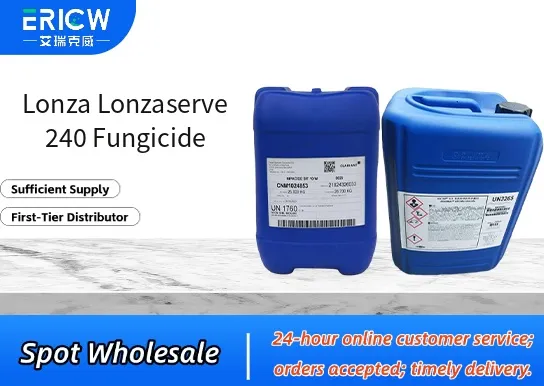
Broad-spectrum fungicidal activity against key spoilage fungi including Aspergillus, Penicillium, and Cladosporium species.
Non-volatile formulation ensuring long-term stability and consistent performance in challenging processing environments.
Low-dose efficacy with excellent compatibility across water-based industrial systems and polymer emulsions.
Designed for non-antibiotic, non-metal-based preservation—supports sustainable product stewardship goals.
pH-stable across a wide range (pH 3–10), enabling use in acidic to mildly alkaline formulations without loss of activity.
Preservation of water-based paints and architectural coatings.
Protection of adhesives and sealants during storage and application.
Mold and fungal control in construction materials such as gypsum board joint compounds.
Stabilization of industrial metalworking fluids and cooling lubricants.
Preservation of textile and leather finishing formulations.
| Chemical Type | Organic isothiazolinone derivative blend |
| Product Form | Liquid concentrate |
| Appearance | Clear to slightly hazy, pale yellow liquid |
| Primary Applications | Industrial preservative for water-based systems |
| Key Features | Non-oxidizing, non-leaching, low odor |
| Benefits | Extended shelf life, reduced microbial recontamination risk |
| Storage Conditions | Store at 5–30°C; protect from freezing and direct sunlight |
| Regulatory Status | Registered under EU Biocidal Products Regulation (BPR) for PT 6 & PT 8 applications |
Q1: What types of fungi does Lonzaserve 240 effectively control?
A: Lonzaserve 240 is formulated to provide broad-spectrum protection against common spoilage and contamination fungi, including Aspergillus, Penicillium, Cladosporium, and yeasts such as Candida and Rhodotorula. Its efficacy is particularly valued in water-based industrial systems where microbial growth poses stability or performance risks.
Q2: In which industrial applications is Lonzaserve 240 typically used?
A: This fungicide is widely applied in water-miscible metalworking fluids, industrial cleaning formulations, latex emulsions, adhesives, and water-based paints and coatings—especially where long-term microbiological stability and resistance to fungal bloom are critical during storage and use.
Q3: How should Lonzaserve 240 be incorporated into a formulation?
A: It is typically added during the final stage of manufacturing, after pH adjustment and cooling, to ensure optimal stability and activity. Due to its water-miscibility and compatibility with many anionic, nonionic, and cationic surfactants, it can be directly dosed or pre-diluted in water or compatible solvents before blending.
Q4: Is Lonzaserve 240 compatible with common biocides used for bacterial control?
A: Yes, Lonzaserve 240 is generally compatible with isothiazolinones (e.g., BIT, MIT), formaldehyde donors, and other broad-spectrum preservatives when used at recommended levels. Synergistic combinations are often employed to achieve comprehensive antimicrobial protection, though compatibility testing under actual formulation conditions is advised.
Contact With Us:
E-mail: wangxingqiang@ericwchem.com
Have a Questions? Call Us:
Add:
Building A1, Jiete Industrial Park, Huangpu District, Guangzhou City, Guangdong Province, China