English
 Español
 tiếng việt
 русский
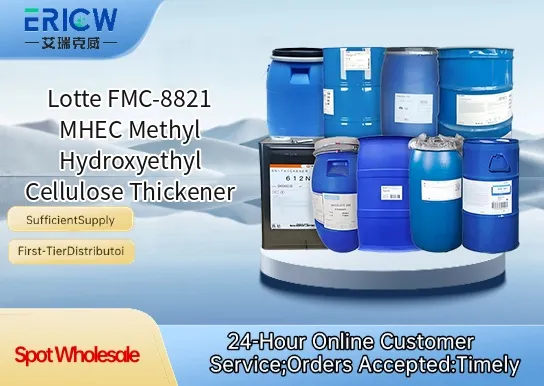
Excellent water solubility with rapid dispersion and low dust generation during handling.
High thickening efficiency in both neutral and mildly alkaline aqueous systems.
Outstanding thermal gelation resistance—maintains viscosity stability up to 90°C.
Good compatibility with common surfactants, electrolytes, and preservatives used in industrial formulations.
Non-ionic character ensures minimal sensitivity to pH shifts and metal ion interference.
Architectural coatings—including interior/exterior latex paints and primers.
Cement-based tile adhesives and self-leveling underlayments.
Water-based industrial maintenance coatings and protective finishes.
Agrochemical suspensions and sprayable pesticide formulations.
Personal care gels and mild cleansing systems requiring non-irritating rheology control.
| Chemical Type | Methyl Hydroxyethyl Cellulose (MHEC) |
| Product Form | White to off-white free-flowing powder |
| Appearance | Free of visible specks or discoloration |
| Primary Applications | Water-based coatings, construction mortars, agrochemicals, personal care |
| Key Features | Non-ionic, thermally stable, salt-tolerant, easy dispersion |
| Benefits | Improved sag resistance, enhanced open time, consistent batch-to-batch performance |
| pH Range (1% solution) | 5.0–8.5 |
| Viscosity (1% aqueous solution, 20°C) | Approx. 8,000–12,000 mPa·s (Brookfield DV-II+ viscometer, spindle #3, 12 rpm) |
Q1: What are the key performance advantages of Lotte FMC-8821 compared to standard HEC or CMC thickeners?
A: Lotte FMC-8821 offers enhanced rheological control with superior water retention, improved compatibility with common co-thickeners and surfactants, and greater stability across a wider pH range (approximately pH 3–12). Its methyl-hydroxyethyl substitution pattern also contributes to reduced sensitivity to electrolytes and better film-forming characteristics in drying applications.
Q2: Is Lotte FMC-8821 suitable for use in water-based architectural coatings and tile adhesives?
A: Yes — it is widely used in high-performance water-based architectural coatings, cementitious tile adhesives, and grouts where balanced viscosity build, anti-sag properties, and extended open time are required. Its non-ionic nature ensures good compatibility with latex polymers, dispersants, and inorganic binders commonly found in these systems.
Q3: How should Lotte FMC-8821 be dispersed to avoid lump formation?
A: For optimal dispersion, pre-mix the powder with a water-miscible liquid (e.g., glycol or ethanol) or dry-blend with other formulation solids before gradual addition to water under moderate to high shear. Cold-water dispersion is possible, but gentle agitation during addition helps prevent agglomeration and ensures full hydration.
Q4: Does Lotte FMC-8821 provide any benefit in terms of freeze-thaw stability?
A: While not a primary freeze-thaw stabilizer, Lotte FMC-8821 contributes to improved formulation robustness during thermal cycling due to its molecular architecture and low tendency to phase separate. It is often used in conjunction with dedicated freeze-thaw additives to support overall system resilience.
Contact With Us:
E-mail: wangxingqiang@ericwchem.com
Have a Questions? Call Us:
Add:
Building A1, Jiete Industrial Park, Huangpu District, Guangzhou City, Guangdong Province, China