English
 Español
 tiếng việt
 русский
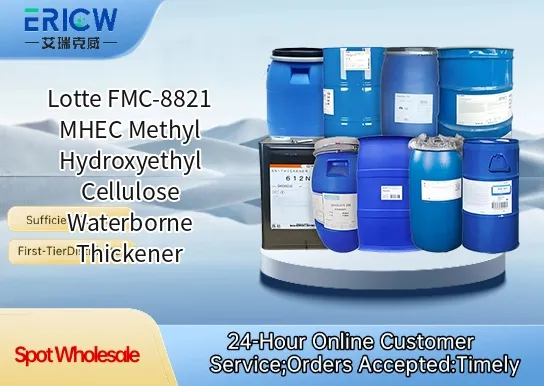
Excellent rheology control with high low-shear viscosity and strong sag resistance in waterborne systems.
Superior compatibility with anionic surfactants, coalescing agents, and common paint additives.
Outstanding thermal and freeze-thaw stability across multiple formulation cycles.
Low foaming profile—minimizes air entrapment during high-speed mixing and application.
pH-independent performance: maintains thickening efficiency across pH 3–12 without viscosity loss.
Architectural interior and exterior latex paints.
Waterborne industrial maintenance coatings.
Acrylic-based wall primers and sealers.
Water-based wood stains and clear finishes.
Low-VOC and zero-VOC decorative coatings.
| Chemical Type | Methyl hydroxyethyl cellulose (MHEC) |
| Product Form | Free-flowing white to off-white powder |
| Appearance | Granular or fine particulate powder |
| Primary Applications | Waterborne architectural and industrial coatings |
| Key Features | Rheology modifier, anti-sag agent, water retention enhancer |
| Benefits | Improved brush/roller application, enhanced leveling, reduced spattering |
| Solubility | Readily dispersible in cold water; fully soluble upon hydration |
| Storage Conditions | Store in cool, dry place below 30°C; protect from moisture |
Q1: What is the primary thickening mechanism of Lotte FMC-8821 in waterborne systems?
A: Lotte FMC-8821 functions primarily through aqueous polymer chain entanglement and hydrogen bonding with water molecules, delivering non-ionic, shear-thinning rheology with excellent viscosity stability across a broad pH range.
Q2: How does FMC-8821 compare to conventional HEC or CMC thickeners in terms of compatibility with biocides and surfactants?
A: Due to its methyl-substituted backbone and balanced hydroxyethyl substitution, FMC-8821 exhibits improved resistance to enzymatic degradation and enhanced compatibility with common isothiazolinone and formaldehyde-releasing biocides, as well as anionic and nonionic surfactants commonly used in architectural and industrial coatings.
Q3: Can FMC-8821 be used in low-VOC or zero-VOC formulations?
A: Yes — as a non-ionic, water-soluble cellulose ether without volatile organic co-solvents or reactive monomers, FMC-8821 supports low-VOC and zero-VOC formulation strategies when combined with compliant binders and additives.
Q4: What is the recommended addition method to avoid lumping during incorporation?
A: For optimal dispersion, FMC-8821 should be added gradually under high-shear mixing to cold or ambient water containing a small amount of compatible co-solvent (e.g., propylene glycol) or pre-hydrated using a vortex mixer — direct addition to hot or highly viscous phases is not advised.
Contact With Us:
E-mail: wangxingqiang@ericwchem.com
Have a Questions? Call Us:
Add:
Building A1, Jiete Industrial Park, Huangpu District, Guangzhou City, Guangdong Province, China