English
 Español
 tiếng việt
 русский
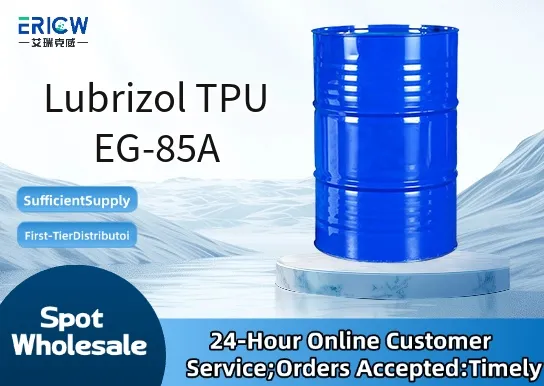
Excellent abrasion resistance for demanding mechanical environments.
Outstanding flexibility and low-temperature toughness down to –40 °C.
Good oil, grease, and hydrocarbon resistance for extended service life.
High melt processability suitable for extrusion, injection molding, and blow molding.
Consistent batch-to-batch quality with ISO-certified manufacturing control.
Automotive interior trim components including door panels and instrument bezels.
Industrial hoses and pneumatic tubing requiring kink resistance and pressure retention.
Consumer electronics protective casings and soft-touch overmolded grips.
Medical device tubing and non-implantable wearable components compliant with ISO 10993-5.
Footwear midsoles and outsole compounds delivering rebound and durability.
| Chemical Type | Aliphatic polyester-based thermoplastic polyurethane |
| Product Form | Natural pellets |
| Appearance | Opaque off-white granules |
| Shore A Hardness (ASTM D2240) | 85 ± 2 |
| Melt Flow Rate (230 °C/2.16 kg, ASTM D1238) | 10–14 g/10 min |
| Density (ASTM D792) | 1.18–1.20 g/cm³ |
| Tensile Strength (ASTM D412) | 32–38 MPa |
| Elongation at Break (ASTM D412) | 500–600 % |
Q1: What is Lubrizol TPU EG-85A primarily used for?
A: Lubrizol TPU EG-85A is a high-performance thermoplastic polyurethane-based additive designed to enhance surface lubricity, reduce coefficient of friction, and improve processability in extruded and injection-molded TPU compounds—particularly in demanding applications such as medical tubing, wire & cable jacketing, and high-flex automotive components.
Q2: Is EG-85A compatible with all TPU grades?
A: EG-85A demonstrates broad compatibility with aromatic and aliphatic TPU resins, including polyester- and polyether-based systems. Optimal dispersion and performance are typically achieved when compounded using standard melt-processing equipment; however, compatibility should be verified experimentally for specific resin formulations and processing conditions.
Q3: How is EG-85A incorporated into TPU formulations?
A: EG-85A is typically added during compounding via twin-screw extrusion or internal mixing. It is supplied as free-flowing pellets and disperses readily under standard melt conditions. Dosage depends on formulation requirements but generally ranges from 0.1% to 2% by weight relative to the base TPU matrix.
Q4: Does EG-85A affect the mechanical properties of the final TPU part?
A: When used within recommended dosage ranges, EG-85A maintains excellent retention of tensile strength, elongation, and tear resistance. Some reduction in hardness may occur at higher loadings, but overall mechanical integrity remains suitable for functional end-use applications requiring both lubricity and durability.
Q5: Can EG-85A be used in medical-grade TPU applications?
A: EG-85A is formulated without intentionally added phthalates, heavy metals, or known biologically reactive impurities. While it is not pre-certified for any specific regulatory pathway, its composition supports evaluation for use in medical devices where surface lubricity and biocompatibility are critical—subject to full formulation-level testing and regulatory validation by the end-user.
Contact With Us:
E-mail: wangxingqiang@ericwchem.com
Have a Questions? Call Us:
Add:
Building A1, Jiete Industrial Park, Huangpu District, Guangzhou City, Guangdong Province, China