English
 Español
 tiếng việt
 русский
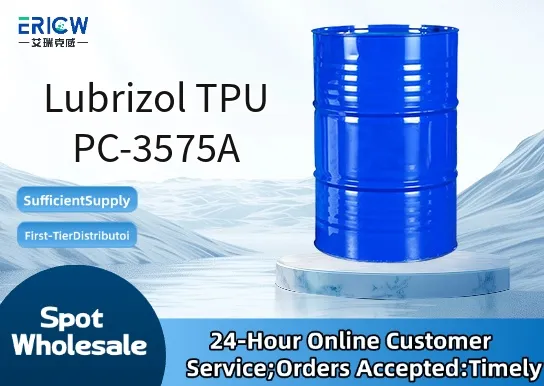
High melt flow index for excellent processability in extrusion and injection molding.
Outstanding abrasion resistance and mechanical toughness across a broad temperature range.
Good hydrolytic stability, enabling reliable performance in humid or wet environments.
Excellent clarity and optical transparency suitable for aesthetic-sensitive applications.
Compatible with polycarbonate (PC) alloys, supporting robust PC/TPU blend formulations.
Automotive interior trim components requiring soft-touch feel and durability.
Medical tubing and connectors demanding biocompatibility support and kink resistance.
Consumer electronics housings and protective overmolding for impact absorption.
Industrial seals and gaskets requiring resilience under dynamic mechanical stress.
Wearable device straps and enclosures needing flexibility, skin contact safety, and UV stability.
| Chemical Type | Thermoplastic Polyurethane (TPU), polyester-based |
| Product Form | Pellets |
| Appearance | Translucent, natural-colored pellets |
| Primary Applications | Overmolding, extrusion profiles, injection-molded components |
| Key Features | High melt flow, PC compatibility, abrasion resistance, hydrolysis resistance |
| Benefits | Enhanced processing efficiency, design freedom in multi-material assemblies, long-term dimensional stability |
| Processing Method | Injection molding, extrusion, blow molding |
| Regulatory Compliance | Meets ISO 10993-5 cytotoxicity screening; RoHS compliant |
Q1: What is the primary function of Lubrizol TPU PC-3575A in thermoplastic polyurethane (TPU) formulations?
A: Lubrizol TPU PC-3575A is a specialized processing aid designed to improve melt flow, reduce extrusion pressure, and enhance surface finish in TPU compounds—particularly during extrusion and injection molding operations.
Q2: Is PC-3575A compatible with common TPU base resins, including polyester- and polyether-based types?
A: Yes, PC-3575A has demonstrated broad compatibility across major TPU chemistries, including both aromatic and aliphatic polyester- and polyether-based grades, supporting consistent performance without phase separation or haze formation.
Q3: How does PC-3575A affect the mechanical properties of finished TPU parts?
A: When used at recommended dosage levels, PC-3575A typically maintains key mechanical attributes—including tensile strength, elongation, and tear resistance—while delivering improved processability. Significant property trade-offs are not expected under standard processing conditions.
Q4: Can PC-3575A be used in applications requiring regulatory compliance for food contact or medical devices?
A: PC-3575A is not pre-approved for regulated end uses such as food-contact or medical applications. Customers must conduct their own full regulatory evaluation—including extractables testing and compliance verification—based on final formulation, processing, and intended use.
Contact With Us:
E-mail: wangxingqiang@ericwchem.com
Have a Questions? Call Us:
Add:
Building A1, Jiete Industrial Park, Huangpu District, Guangzhou City, Guangdong Province, China