English
 Español
 tiếng việt
 русский
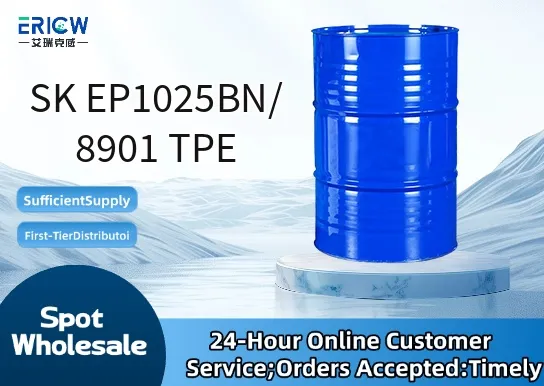
Excellent soft-touch feel with balanced elasticity and compression set resistance.
Good processability via injection molding and extrusion without pre-drying.
Enhanced adhesion to polypropylene (PP) and polyethylene (PE) substrates.
RoHS-compliant formulation with no added halogens or heavy metals.
UV-stable performance suitable for indoor and limited outdoor applications.
Overmolding for automotive interior trim components.
Soft-grip handles for power tools and consumer appliances.
Sealing profiles and gaskets for white goods housings.
Ergonomic grips for medical device housings and portable equipment.
Flexible hinges and living hinges in durable consumer packaging.
| Chemical Type | Thermoplastic Elastomer (TPE) – Styrenic Block Copolymer (SBC) based |
| Product Form | Pellets |
| Appearance | Off-white, translucent granules |
| Hardness (Shore A) | 25 ± 3 |
| Melt Flow Rate (230°C/2.16 kg) | 25–35 g/10 min |
| Density | 0.90–0.92 g/cm³ |
| Key Features | Soft-touch, PP/PE adhesion, low odor, recyclable |
| Primary Applications | Overmolding, soft grips, seals, flexible components |
Q1: What is the primary function of SK EP1025BN/8901 TPE in thermoplastic elastomer formulations?
A: SK EP1025BN/8901 TPE is a functionalized ethylene-propylene-based thermoplastic elastomer designed to enhance melt processability, improve compatibility between polyolefin matrices and polar additives, and provide balanced elasticity and thermal stability in compounded TPE systems.
Q2: Is SK EP1025BN/8901 TPE suitable for applications requiring food-contact compliance?
A: While SK EP1025BN/8901 TPE is formulated without intentionally added heavy metals or known restricted substances, formal food-contact approval depends on the final compound composition, processing conditions, and applicable regional regulatory requirements. Customers are advised to conduct full regulatory assessment and migration testing as part of their qualification process.
Q3: How does SK EP1025BN/8901 TPE differ from standard EPDM-based TPEs?
A: Unlike conventional EPDM-based TPEs, SK EP1025BN/8901 TPE features tailored molecular architecture and controlled functionalization, enabling improved dispersion in polypropylene and polyethylene blends, faster cycle times during injection molding, and enhanced resistance to compression set under dynamic loading conditions.
Q4: What processing methods are recommended for SK EP1025BN/8901 TPE?
A: SK EP1025BN/8901 TPE is optimized for conventional thermoplastic processing techniques including injection molding, extrusion, and two-shot overmolding. It exhibits good thermal stability up to typical processing temperatures for polyolefin-based TPEs and requires no pre-drying under standard ambient conditions.
Contact With Us:
E-mail: wangxingqiang@ericwchem.com
Have a Questions? Call Us:
Add:
Building A1, Jiete Industrial Park, Huangpu District, Guangzhou City, Guangdong Province, China