English
 Español
 tiếng việt
 русский
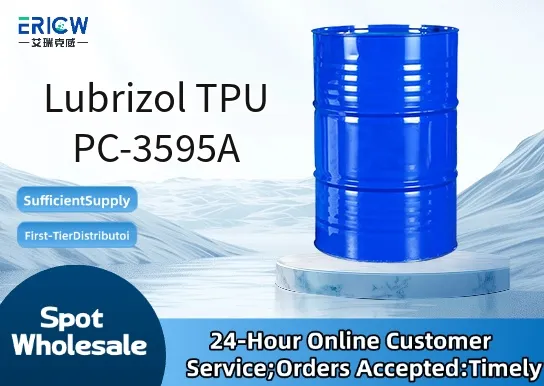
High melt flow index for excellent processability in extrusion and injection molding.
Outstanding low-temperature flexibility with retained toughness down to –40 °C.
Enhanced abrasion resistance suitable for demanding mechanical environments.
Good hydrolytic stability, maintaining performance under humid or warm conditions.
Compatible with common engineering thermoplastics for alloy development and co-processing.
Automotive interior trim components including soft-touch panels and instrument bezels.
Consumer electronics protective casings and flexible cable jackets.
Medical tubing requiring kink resistance and biocompatibility support (ISO 10993 pre-screened).
Industrial hoses and pneumatic tubing with dynamic flexing requirements.
Footwear midsoles and performance outsoles requiring rebound resilience and wear durability.
| Chemical Type | Aliphatic polyester-based thermoplastic polyurethane |
| Product Form | Pellets |
| Appearance | Off-white to light tan, free-flowing granules |
| Primary Applications | Extrusion, injection molding, blow molding |
| Key Features | High melt flow, low-temperature flexibility, abrasion resistance |
| Benefits | Improved processing efficiency, part design freedom, extended service life |
| Density (ASTM D792) | 1.18–1.20 g/cm³ |
| Melt Flow Index (210 °C/2.16 kg, ASTM D1238) | 12–16 g/10 min |
Q1: What is the primary function of Lubrizol TPU PC-3595A in thermoplastic polyurethane (TPU) formulations?
A: Lubrizol TPU PC-3595A is a specialized processing aid designed to improve melt flow, reduce extrusion pressure, and enhance surface finish in TPU compounds—particularly during high-speed extrusion and injection molding processes.
Q2: Is PC-3595A compatible with all common TPU chemistries (e.g., polyester- and polyether-based TPUs)?
A: Yes, PC-3595A demonstrates broad compatibility across major TPU families, including aromatic and aliphatic polyester- and polyether-based grades. Compatibility should always be confirmed through small-scale formulation trials under intended processing conditions.
Q3: How does PC-3595A affect the mechanical properties of the final TPU product?
A: When used at recommended dosage levels, PC-3595A typically preserves key mechanical performance attributes—including tensile strength, elongation, and abrasion resistance—while delivering significant processing benefits. Significant over-addition may impact hardness or elasticity, so optimization is advised.
Q4: What is the typical dosage range for PC-3595A in TPU processing applications?
A: Dosage generally ranges from 0.1% to 2% by weight relative to the base TPU resin, depending on equipment type, throughput rate, and desired surface quality. Most users begin evaluation at 0.5–1.0% and adjust based on rheological response and end-product requirements.
Q5: Does PC-3595A require pre-drying before use in TPU compounding?
A: While PC-3595A itself is not highly hygroscopic, it is recommended to store and handle it under standard dry conditions. Pre-drying is generally unnecessary unless ambient humidity is exceptionally high or the material has been exposed to moisture; however, consistent drying of the TPU base resin remains critical.
Contact With Us:
E-mail: wangxingqiang@ericwchem.com
Have a Questions? Call Us:
Add:
Building A1, Jiete Industrial Park, Huangpu District, Guangzhou City, Guangdong Province, China