English
 Español
 tiếng việt
 русский
Excellent abrasion resistance for demanding dynamic applications.
Outstanding low-temperature flexibility down to –40 °C.
Good hydrolytic stability, suitable for humid and wet environments.
High tensile strength and elongation at break for durable elastomeric performance.
Compatible with common processing methods including extrusion, injection molding, and calendering.
Automotive interior trim components (e.g., instrument panel skins, door armrests).
Industrial hoses and fluid transfer tubing requiring flex fatigue resistance.
Consumer electronics protective casings and wearable device bands.
Medical tubing and non-invasive device components compliant with ISO 10993 biocompatibility guidance.
Footwear midsoles and outsoles requiring resilience and energy return.
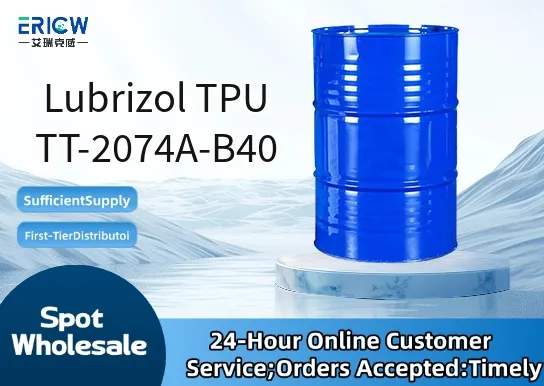
| Chemical Type | Thermoplastic Polyurethane (TPU), polyester-based |
| Product Form | Pellets |
| Appearance | Off-white to light tan, free-flowing granules |
| Primary Applications | Extruded profiles, molded parts, coated fabrics |
| Key Features | Abrasion resistance, low-temperature flexibility, hydrolysis resistance |
| Benefits | Extended service life in cyclic mechanical stress; process efficiency via standard TPU equipment |
| Processing Method | Extrusion, injection molding, blow molding |
| Regulatory Compliance | Meets FDA 21 CFR §177.1210 for indirect food contact (subject to final formulation) |
Q1: What is the primary function of Lubrizol TPU TT-2074A-B40 in thermoplastic polyurethane (TPU) formulations?
A: Lubrizol TPU TT-2074A-B40 is a high-performance processing aid and surface modifier designed to enhance melt flow, reduce extrusion torque, and improve surface gloss and clarity in TPU compounds—particularly in demanding applications such as thin-gauge films, monofilaments, and injection-molded parts.
Q2: Is TT-2074A-B40 compatible with all major TPU chemistries (e.g., polyester-, polyether-, and polycaprolactone-based TPUs)?
A: Yes, TT-2074A-B40 demonstrates broad compatibility across common TPU base resins, including aromatic and aliphatic variants. It is especially effective in polyester-based TPUs where melt viscosity control and surface defect reduction are critical during high-speed processing.
Q3: How should TT-2074A-B40 be incorporated into TPU formulations?
A: It is typically added via dry blending prior to extrusion or injection molding. For optimal dispersion, pre-blending with a portion of the base TPU resin is recommended. Dosage depends on formulation requirements but generally ranges from 0.1% to 2% by weight relative to the total polymer mass.
Q4: Does TT-2074A-B40 affect the mechanical properties of the final TPU product?
A: When used within the recommended dosage range, TT-2074A-B40 has minimal impact on tensile strength, elongation at break, or hardness. In some cases, improved dispersion may even contribute to more consistent mechanical performance across production batches.
Q5: Can TT-2074A-B40 be used in applications requiring regulatory compliance for food contact or medical devices?
A: TT-2074A-B40 is not pre-approved for direct food-contact or implantable medical applications. Customers intending such use must conduct full regulatory evaluation—including migration testing and biocompatibility assessment—as part of their own qualification process.
Contact With Us:
E-mail: wangxingqiang@ericwchem.com
Have a Questions? Call Us:
Add:
Building A1, Jiete Industrial Park, Huangpu District, Guangzhou City, Guangdong Province, China