English
 Español
 tiếng việt
 русский
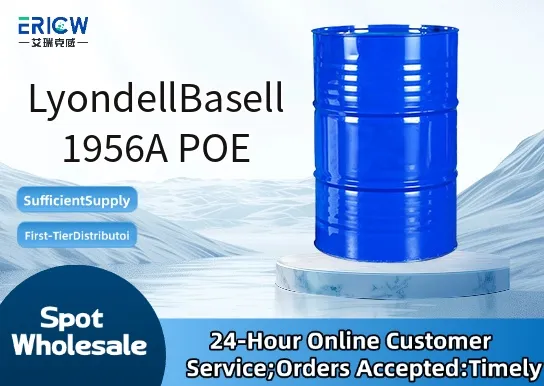
Excellent melt processability for high-output extrusion and injection molding
Outstanding low-temperature flexibility and impact resistance
Superior compatibility with polypropylene (PP) and polyethylene (PE) matrices
Good thermal stability and long-term aging performance
Low extractables and compliant with FDA 21 CFR §177.1520 for food-contact applications
Automotive interior trim components (dashboards, door panels)
Flexible packaging films requiring seal integrity and toughness
Toughened polypropylene compounds for appliance housings
Soft-touch overmolding for consumer electronics and power tools
Medical tubing and device components requiring biocompatibility and flexibility
| Chemical Type | Polyolefin Elastomer (POE), ethylene-octene copolymer |
| Product Form | Pellets |
| Appearance | Off-white to light beige, free-flowing pellets |
| Primary Applications | Toughening agent for polypropylene, flexible packaging, soft-touch overmolding |
| Key Features | High elasticity, excellent clarity, low density |
| Benefits | Improved impact strength at low temperatures, enhanced processing efficiency, reduced part weight |
| Processing Method | Injection molding, extrusion, blow molding, overmolding |
| Regulatory Compliance | FDA 21 CFR §177.1520, RoHS compliant, REACH registered |
Q1: What is LyondellBasell 1956A POE and how does it differ from conventional plasticizers?
A: LyondellBasell 1956A POE is a polyolefin elastomer-based processing aid designed to enhance melt flow, reduce extrusion torque, and improve surface finish in rigid PVC and other thermoplastic compounds. Unlike traditional small-molecule plasticizers, it functions as a polymeric modifier—offering permanent compatibility, reduced volatility, and improved thermal stability without migration or plate-out concerns.
Q2: In which PVC applications is 1956A POE most commonly used?
A: It is widely employed in rigid PVC profiles, pipes, and window systems where high output rates, smooth die flow, and excellent dimensional stability are required. It also supports consistent performance in co-extruded applications and contributes to improved impact resistance without compromising stiffness.
Q3: How is 1956A POE typically incorporated into PVC formulations?
A: It is generally added during the dry-blend stage alongside PVC resin and other additives, and is fully dispersible using standard high-speed mixers. Dosage depends on formulation requirements but typically ranges from 0.1% to 2% by weight relative to PVC resin, with optimal levels determined through rheological evaluation and process validation.
Q4: Does 1956A POE affect the long-term thermal stability or UV resistance of PVC compounds?
A: As a saturated polyolefin-based additive, 1956A POE does not introduce additional sites for thermal degradation and exhibits inherent resistance to oxidation. It does not interfere with standard PVC stabilizer systems and maintains compatibility with common UV absorbers and HALS packages when properly formulated.
Contact With Us:
E-mail: wangxingqiang@ericwchem.com
Have a Questions? Call Us:
Add:
Building A1, Jiete Industrial Park, Huangpu District, Guangzhou City, Guangdong Province, China