English
 Español
 tiếng việt
 русский
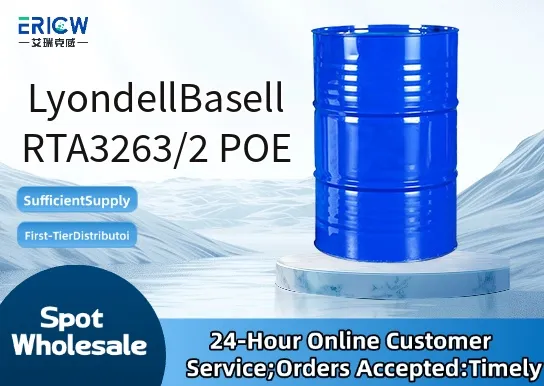
Highly compatible ethylene-octene copolymer with excellent melt processability for extrusion and injection molding.
Outstanding low-temperature flexibility and impact resistance across a wide service temperature range.
Superior long-term thermal stability and oxidative resistance, supporting extended product lifecycle in demanding environments.
Low extractables and excellent color stability—ideal for applications requiring regulatory compliance and aesthetic consistency.
Designed for easy blending with polyolefins (e.g., PP, PE) to enhance toughness without sacrificing stiffness balance.
Automotive interior trim components including door panels, instrument clusters, and soft-touch overlays.
Flexible packaging films requiring seal integrity, puncture resistance, and clarity.
Medical tubing and fluid-contact components leveraging biocompatibility and sterilization resilience.
Consumer goods such as grips, seals, gaskets, and overmolded elastomeric parts.
Construction-related flexible profiles, weatherstripping, and expansion joint systems.
| Chemical Type | Ethylene-octene copolymer (Polyolefin Elastomer) |
| Product Form | Pellets |
| Appearance | Off-white to light beige, free-flowing cylindrical pellets |
| Primary Applications | Toughening modifier for polypropylene; flexible compound base resin |
| Key Features | Low density, high elasticity, excellent dispersion in PP matrices |
| Benefits | Improved impact strength at low temperatures, enhanced processing efficiency, reduced energy consumption during compounding |
| Processing Method | Extrusion, injection molding, blow molding |
| Regulatory Status | Compliant with FDA 21 CFR §177.1520 for food-contact applications (subject to formulation) |
Q1: What is the primary function of RTA3263/2 POE in polymer formulations?
A: RTA3263/2 POE is a polyolefin elastomer designed to enhance impact resistance and toughness in polypropylene and other polyolefin-based systems, particularly under low-temperature conditions. It functions as a reactive or non-reactive impact modifier depending on the processing method and matrix compatibility.
Q2: Is RTA3263/2 POE suitable for food-contact applications?
A: RTA3263/2 POE is not pre-approved for direct food contact by default. Its suitability depends on final formulation, processing conditions, and regulatory evaluation by the end-user. Customers intending food-contact use must conduct full compliance testing per applicable regional requirements.
Q3: How does RTA3263/2 POE differ from conventional EPDM or EPR impact modifiers?
A: Unlike traditional EPDM or EPR modifiers, RTA3263/2 POE offers superior compatibility with polypropylene due to its polyolefin backbone, resulting in finer dispersion, improved melt processability, and better retention of stiffness-toughness balance in the final compound.
Q4: What are typical processing recommendations for RTA3263/2 POE?
A: RTA3263/2 POE processes well using standard compounding equipment such as twin-screw extruders. Optimal dispersion is achieved at moderate shear rates and temperatures compatible with polypropylene—typically below 240 °C—to avoid thermal degradation while ensuring uniform phase distribution.
Contact With Us:
E-mail: wangxingqiang@ericwchem.com
Have a Questions? Call Us:
Add:
Building A1, Jiete Industrial Park, Huangpu District, Guangzhou City, Guangdong Province, China