English
 Español
 tiếng việt
 русский
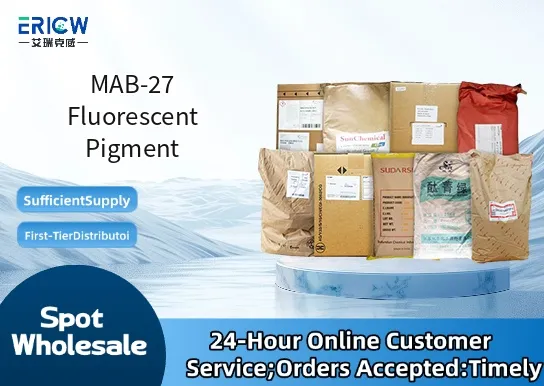
High-intensity fluorescence under UV-A (365 nm) and visible blacklight illumination.
Excellent thermal stability up to 220°C, suitable for high-temperature processing.
Good compatibility with acrylic, polyester, and polyurethane resin systems.
Non-bleeding formulation ensures color integrity in transparent and translucent media.
Low migration tendency in polymer matrices, supporting long-term performance in demanding applications.
Safety signage and emergency egress markings for architectural and industrial facilities.
UV-responsive inks for security printing and brand authentication features.
Fluorescent coatings on plastic components for consumer electronics and automotive trim.
Special-effect masterbatches for injection-molded and extruded thermoplastics.
Decorative films and laminates requiring daylight-visible fluorescence with enhanced night visibility.
| Chemical Type | Organic fluorescent dye dispersed in inert polymeric carrier |
| Product Form | Free-flowing fine powder |
| Appearance | Bright yellow-green powder (dry state), vivid green-yellow fluorescence under UV |
| Primary Applications | Polymer coloring, specialty inks, protective coatings, safety graphics |
| Key Features | UV-stable, non-metallic, REACH-compliant, low extractables |
| Recommended Loading Range | 0.5–3.0 wt% depending on substrate and required intensity |
| Storage Conditions | Keep in original sealed container at 15–25°C, protect from moisture and direct sunlight |
| Shelf Life | 24 months from date of manufacture when stored properly |
Q1: What types of polymer systems is MAB-27 compatible with?
A: MAB-27 exhibits good compatibility with a broad range of thermoplastics and thermosets, including but not limited to polyethylene (PE), polypropylene (PP), polystyrene (PS), ABS, PVC, and certain polyurethane (PU) formulations. Compatibility should always be verified through small-scale trials due to variations in resin grade, additives, and processing conditions.
Q2: How does MAB-27 perform under UV exposure and elevated processing temperatures?
A: MAB-27 is engineered for enhanced thermal stability and moderate UV resistance, supporting typical melt-processing temperatures up to 220–240 °C for short residence times. Prolonged exposure to intense UV radiation or extreme heat may gradually affect fluorescence intensity; therefore, stabilization strategies (e.g., co-addition of UV absorbers or HALS) are recommended for outdoor or long-term applications.
Q3: What is the recommended dosage range for optimal fluorescence effect?
A: MAB-27 is highly efficient and typically used at low concentrations. The effective dosage generally ranges from 0.1% to 2% by weight, depending on the desired brightness level, substrate opacity, and base polymer transparency. Lower loadings often suffice in clear matrices, while higher amounts may be needed for pastel or opaque systems — optimization via lab-scale trials is strongly advised.
Q4: Can MAB-27 be used in food-contact or medical-grade applications?
A: MAB-27 is not pre-approved for direct food-contact or implantable medical applications. Its suitability for regulated end uses depends entirely on full formulation compliance, regulatory review by the end-user, and validation against applicable regional requirements (e.g., FDA, EFSA, or ISO 10993). Customers must conduct their own safety and migration assessments prior to commercial use in such applications.
Contact With Us:
E-mail: wangxingqiang@ericwchem.com
Have a Questions? Call Us:
Add:
Building A1, Jiete Industrial Park, Huangpu District, Guangzhou City, Guangdong Province, China