English
 Español
 tiếng việt
 русский
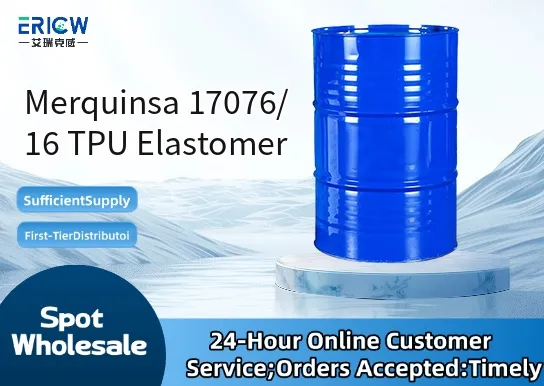
Excellent abrasion resistance suitable for high-wear applications.
Outstanding elasticity and recovery performance across a wide temperature range.
Good processability via extrusion, injection molding, and calendering.
High transparency and clarity in thin-section parts.
Hydrolysis-resistant formulation with enhanced long-term stability in humid environments.
Automotive interior trim and soft-touch surfaces.
Medical tubing and non-sterile disposable device components.
Consumer electronics protective casings and flexible connectors.
Footwear midsoles and outsole compounds requiring dynamic flexibility.
Industrial hoses and pneumatic seals demanding resilience and fatigue resistance.
| Chemical Type | Thermoplastic Polyurethane (TPU), Polyester-based |
| Product Form | Pellets |
| Appearance | Translucent, free-flowing granules |
| Primary Applications | Extrusion, injection molding, calendering |
| Key Features | Abrasion resistance, elasticity, hydrolysis resistance, clarity |
| Processing Temperature Range | 180–220 °C |
| Density (g/cm³) | 1.18–1.20 |
| Melt Flow Index (230 °C / 5 kg) | 10–14 g/10 min |
Q1: What is the primary application domain for Merquinsa 17076/16?
A: Merquinsa 17076/16 is a thermoplastic polyurethane elastomer specifically engineered for demanding extrusion and injection molding applications, with strong suitability in technical films, flexible tubing, and high-performance seals where resilience, abrasion resistance, and low-temperature flexibility are critical.
Q2: Is this grade suitable for contact with food or potable water?
A: Merquinsa 17076/16 is not pre-certified for food-contact or potable water applications. Customers requiring regulatory compliance must conduct full formulation-level testing and validation according to applicable regional requirements, as final approval depends on processing conditions, additives, and end-use configuration.
Q3: How does Merquinsa 17076/16 compare to standard polyester-based TPUs in terms of hydrolytic stability?
A: As a polyester-type TPU, Merquinsa 17076/16 offers good mechanical performance but exhibits lower inherent hydrolytic resistance compared to polyether-based TPUs. For long-term use in humid or aqueous environments, stabilization—such as incorporation of hydrolysis inhibitors or careful drying prior to processing—is recommended.
Q4: What drying conditions are recommended before processing?
A: To ensure optimal melt stability and mechanical properties, Merquinsa 17076/16 should be dried thoroughly prior to processing—typically at 80–90 °C for 3–4 hours in a dehumidifying dryer. Residual moisture levels should be maintained below 0.05% to prevent degradation during melt processing.
Contact With Us:
E-mail: wangxingqiang@ericwchem.com
Have a Questions? Call Us:
Add:
Building A1, Jiete Industrial Park, Huangpu District, Guangzhou City, Guangdong Province, China