English
 Español
 tiếng việt
 русский
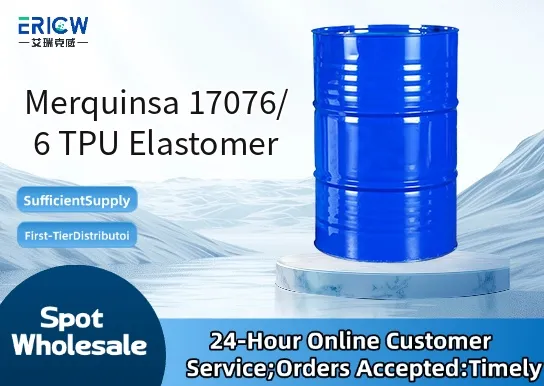
Excellent abrasion resistance for demanding mechanical environments.
High tensile strength and elongation at break, ensuring robust performance under dynamic stress.
Good low-temperature flexibility down to –30 °C without embrittlement.
Outstanding oil, grease, and hydrocarbon resistance for industrial fluid-exposed applications.
Processable via standard thermoplastic methods including extrusion, injection molding, and calendering.
High-performance automotive interior trim and protective seals.
Industrial hoses and pneumatic tubing requiring fatigue resistance.
Wear-resistant conveyor belts and scraper blades in material handling systems.
Specialty footwear components such as midsoles and outsoles for work and safety boots.
Flexible couplings and vibration-damping mounts in machinery.
| Chemical Type | Thermoplastic Polyurethane (TPU), polyester-based |
| Product Form | Pellets |
| Appearance | Off-white to light beige granules |
| Primary Applications | Extruded profiles, molded parts, flexible industrial components |
| Key Features | Abrasion resistance, oil resistance, low-temperature flexibility |
| Benefits | Extended service life in harsh environments, recyclability, processing efficiency |
| Processing Temperature Range | 180–210 °C (recommended) |
| Specific Gravity (ASTM D792) | 1.20–1.24 |
Q1: What are the key processing advantages of Merquinsa 17076/6 compared to conventional TPU grades?
A: Merquinsa 17076/6 is engineered for enhanced melt stability and lower viscosity at processing temperatures, enabling smoother extrusion and injection molding—particularly beneficial for thin-walled profiles and complex geometries. Its balanced thermal window reduces risk of degradation during extended residence times.
Q2: Is this grade suitable for applications requiring skin contact or medical device components?
A: Merquinsa 17076/6 is formulated without added plasticizers or heavy-metal catalysts and exhibits low extractables, making it appropriate for select non-implantable, short-term skin-contact applications—subject to full biocompatibility validation by the end-user according to intended use and regulatory pathway.
Q3: How does Merquinsa 17076/6 perform in dynamic mechanical environments, such as flexible couplings or vibration-damping mounts?
A: This grade delivers excellent resilience and fatigue resistance under repeated flexing or cyclic loading, retaining elasticity and dimensional stability over extended service life—especially where moderate temperature fluctuations and mechanical stress coexist.
Q4: Can Merquinsa 17076/6 be blended with other thermoplastics or elastomers?
A: It demonstrates good compatibility with certain polyesters, polyethers, and selected thermoplastic vulcanizates (TPVs) when compounded under controlled conditions; however, phase separation may occur with highly non-polar polymers like PP or PE. Compatibility testing is recommended for each specific blend system.
Contact With Us:
E-mail: wangxingqiang@ericwchem.com
Have a Questions? Call Us:
Add:
Building A1, Jiete Industrial Park, Huangpu District, Guangzhou City, Guangdong Province, China