English
 Español
 tiếng việt
 русский
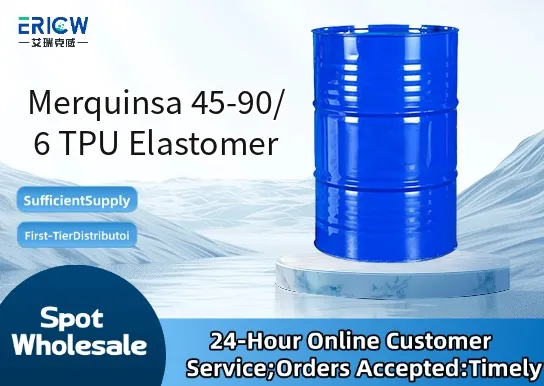
Excellent abrasion and wear resistance for demanding mechanical environments.
High tensile strength and elongation at break, ensuring robust performance under dynamic stress.
Good low-temperature flexibility down to –30 °C without significant loss of elasticity.
Outstanding oil, grease, and hydrocarbon resistance compared to conventional thermoplastics.
Easy processability via extrusion, injection molding, and calendering with standard TPU equipment.
Industrial hoses and hydraulic tubing requiring high pressure and chemical resilience.
Roller covers and conveyor belts in material handling and mining operations.
Automotive airbag covers and interior trim components demanding tactile softness and durability.
Medical tubing and non-implantable fluid-handling devices compliant with ISO 10993-5 cytotoxicity guidelines.
Footwear midsoles and outsoles requiring energy return, grip, and weather resistance.
| Chemical Type | Aliphatic polyester-based thermoplastic polyurethane (TPU) |
| Product Form | Pellets |
| Appearance | Off-white to light beige granules |
| Hardness (Shore A) | 85–90 |
| Density (g/cm³) | 1.18–1.22 |
| Melt Flow Index (g/10 min, 210 °C/5 kg) | 10–14 |
| Key Features | Hydrolysis-resistant, UV-stabilized, halogen-free |
| Primary Applications | Extruded profiles, molded parts, flexible tubing, industrial wear components |
Q1: What is the primary functional role of Merquinsa 45-90/6 in TPU formulations?
A: Merquinsa 45-90/6 functions as a high-performance processing aid and melt-flow modifier for thermoplastic polyurethane (TPU) compounds. It enhances extrudability, reduces melt viscosity, and improves surface finish without significantly compromising mechanical integrity or thermal stability.
Q2: Is Merquinsa 45-90/6 compatible with both aromatic and aliphatic TPU systems?
A: Yes, it demonstrates broad compatibility across common aromatic and aliphatic TPU base resins. Its non-reactive, physical blending mechanism ensures stable dispersion and consistent performance regardless of the diisocyanate or chain extender chemistry used in the TPU matrix.
Q3: How should Merquinsa 45-90/6 be incorporated into TPU processing?
A: It is typically added directly to the TPU resin prior to extrusion or injection molding—either via dry-blend pre-mixing or gravimetric feeding. No pre-drying is required, and it disperses readily under standard melt-processing conditions without needing reactive compatibilizers or solvents.
Q4: Does Merquinsa 45-90/6 affect the final product’s regulatory compliance for food-contact or medical applications?
A: Merquinsa 45-90/6 is not intended for direct regulatory approval; its use in regulated applications depends on the full formulation, processing history, and end-use requirements. Customers must conduct appropriate migration testing and verify compliance with applicable regional regulations based on their specific application and concentration.
Contact With Us:
E-mail: wangxingqiang@ericwchem.com
Have a Questions? Call Us:
Add:
Building A1, Jiete Industrial Park, Huangpu District, Guangzhou City, Guangdong Province, China